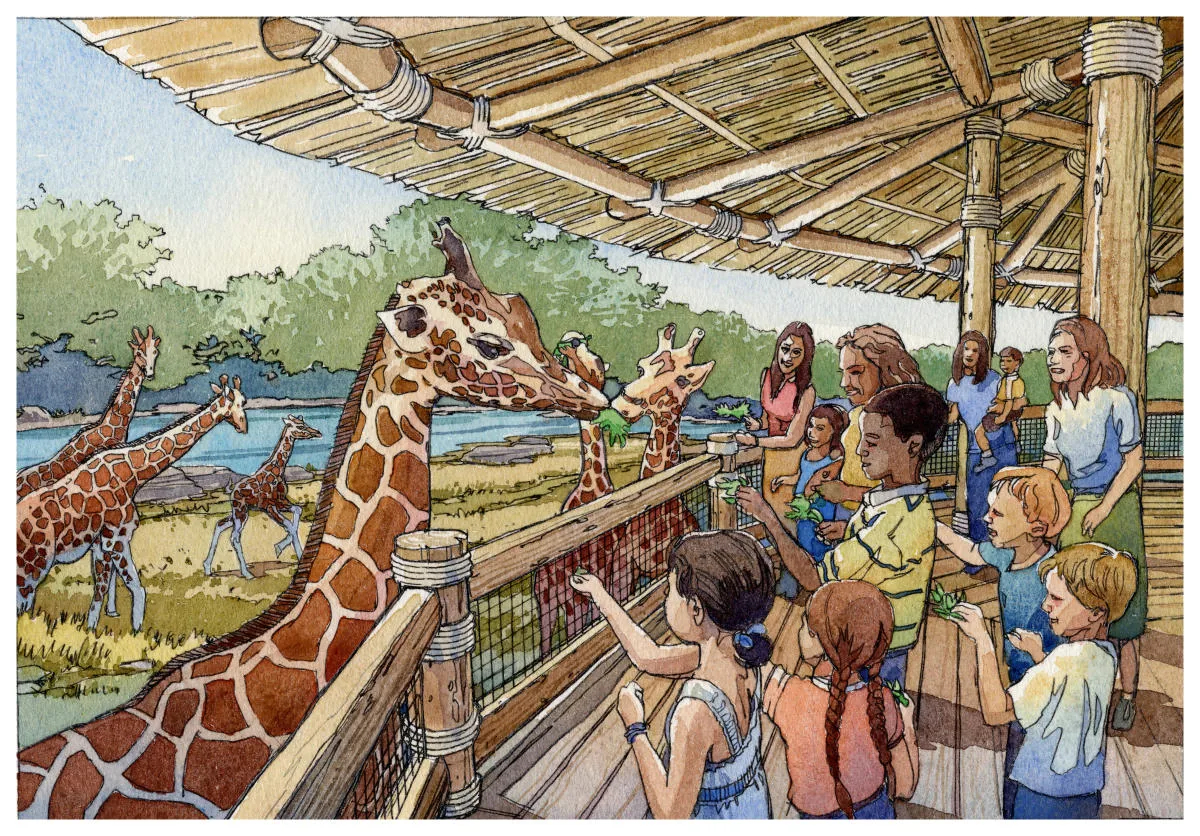
There is no verified Planet Zoo 2 animal food costs table or species feeding-price formula in this prerelease guide, updated on 12 October 2026. The game launches on 13 October. Exact food prices, feeding intervals, diet settings and any cost modifiers need to be checked in the released game instead of copied from Planet Zoo.
What is confirmed is that animals need access to food and water, Keepers feed and care for them, and the zoo must maintain positive cash flow while paying its running costs. Feeding belongs inside a complete care budget with staff support, facilities and any required infrastructure.
To investigate a food-cost concern, first distinguish a financial question from a care-delivery problem. Money spent on animal care and animals not receiving the care they need are different issues. Reducing a budget does not diagnose an unmet feeding need.
Separate food expenditure from the whole care bill
When a zoo's finances worsen, avoid immediately blaming animal food. Hiring, staff salaries, energy bills, construction and animal acquisition are confirmed financial commitments. The amount associated with feeding should be identified from the actual finance information available in your game.
Keep recurring operation separate from one-time spending. A habitat build or animal purchase can produce a sharp cash decrease without showing that routine feeding is unaffordable. Likewise, a modest construction phase does not prove that ongoing care will fit comfortably into the budget.
A simple personal worksheet can contain the observed feeding expenditure, staff support, relevant infrastructure and recent one-time purchases. Use the game's actual categories where they are provided; the worksheet is not a claim that the interface contains a particular set of accounts.
Leave uncertain entries blank until you can inspect them. A precise-looking estimate based on another game's diet price is less useful than an honest gap that tells you what to verify next.
Plan food access with the habitat
Animals need food and water as part of welfare, alongside space, terrain, plants, social conditions and enrichment. Feeding cannot be treated as an isolated line in a spreadsheet while the environment remains unfinished.
Plan the care arrangement when designing the habitat. Identify where the animals live, how their needs will be met and which Keeper support is intended for the area. Use the species information actually available in Planet Zoo 2 rather than assuming one feeding arrangement suits every resident.
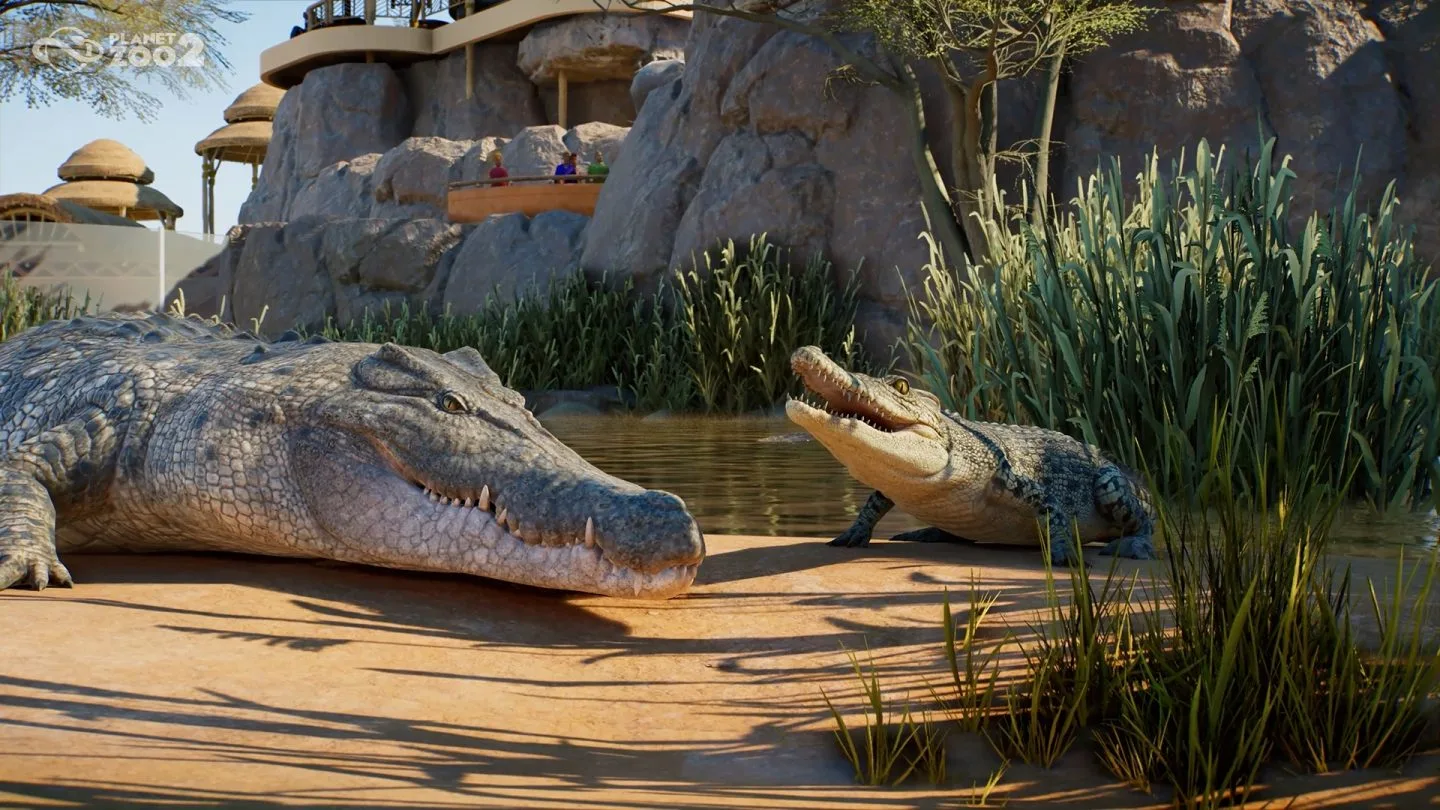
The crocodile habitat is a reminder that feeding supports an animal living in a complete physical environment. Land, water and shelter remain part of the care project. This image does not show a food price, a diet setting or a feeding schedule.
When considering another animal, ask whether the current habitat and support plan can accommodate it appropriately. The purchase is only one financial step; continuing care needs to remain viable after the animal arrives.
Distinguish an unfed animal from an expensive animal
If an animal lacks access to food, investigate the care condition first. A feeding problem is not automatically evidence that the species is too expensive or that a cheaper diet is available.
Keepers are the confirmed role responsible for feeding and caring for animals. Staff facilities and Work Zones support the zoo's operating arrangement. Review the actual Keeper support, access, assignments and feedback relevant to the habitat in your game.
Do not claim that an animal is starving because of one particular bug before checking what the game reports. Also do not assume an extra hire will resolve every feeding issue. A staffing problem, an unfinished facility and an incorrect care setup need different actions.
If the animals are being cared for but the zoo is spending more than expected, shift to the financial investigation. That means inspecting expenditure and recent changes, rather than repeatedly altering the habitat's care arrangement without a reason.
Include the staff support that makes feeding possible
Keepers feed and care for animals, and the described Planet Zoo 2 building workflow includes positioning Keeper Huts near habitats. That is part of a physical support network around the animals.
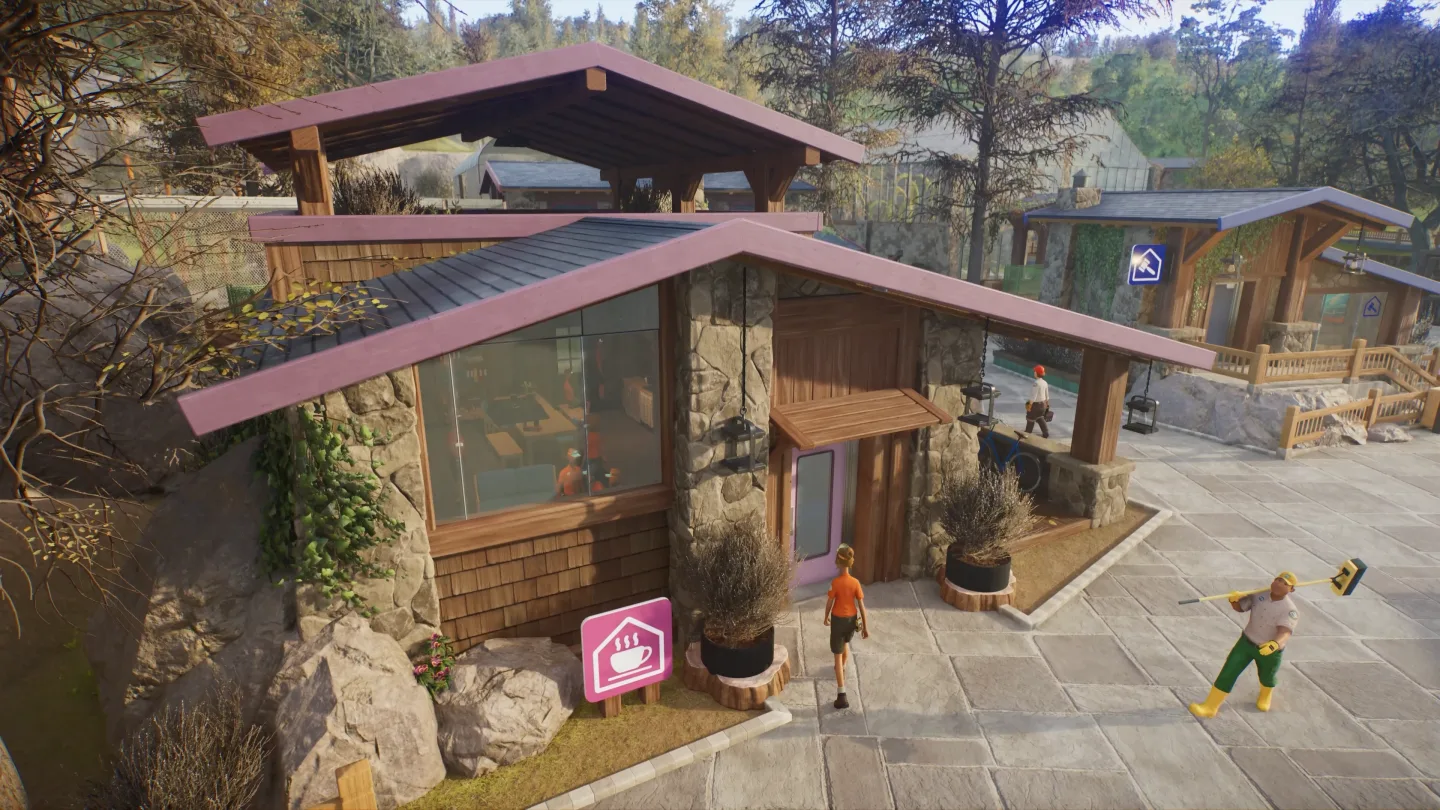
The staff-facility scene shows how service buildings can sit visibly within a zoo. Unlike the original game's arrangement, staff facilities and utilities do not need to be hidden from guests. Use that freedom to plan practical support near the work rather than placing it far away solely to conceal it.
When reviewing feeding expenditure, keep the cost of staff operation visible without pretending it is identical to the price of food. Salaries are a separate confirmed running cost. A sustainable care budget needs room for both the supplies you observe and the people performing the work.
Training, sufficient salary and manageable workload help staff satisfaction. Those conditions matter to an operating zoo, but this guide does not provide a training tier or efficiency formula that reduces food spending by a specific amount.
Budget before increasing the population
Adding animals creates a new care commitment. Before expanding a habitat population, check the species' applicable needs and the capacity of the existing care plan. Do not decide solely from the acquisition price.
Make a note of the current population, the change you intend and any new facilities or staffing work it creates. Once the animals are added in the released game, observe the actual financial and welfare results rather than assuming a linear food-price formula.
The guide does not claim that doubling a population doubles a particular bill, nor that offspring follow a fixed feeding-cost rule. Those relationships require evidence from the final game.
If you cannot yet judge the continuing cost, expand in a way that lets you observe and understand the result. This is planning advice about reducing uncertainty, not a prescription for a universal best group size. Animal social requirements remain a separate constraint and should not be ignored for convenience.
Compare similar operating periods
A meaningful cost comparison needs a consistent context. If you want to understand whether feeding expenditure has changed, record observations over comparable in-game periods and note changes to the animals or support arrangements.
Use the time period and finance information actually displayed by your game. Do not substitute real-world elapsed time for an in-game reporting period and assume they represent the same thing.
When an observed bill changes, record what happened between observations. Population changes, a newly opened habitat or other operating work may provide useful context. That note does not prove causation, but it tells you which relationship to investigate.
Avoid comparing a quiet established period with a major expansion and treating the difference as a species food price. Construction and other spending can obscure the narrow feeding question. Keep the financial categories separate wherever the game allows you to do so.
Do not cut care to solve an unidentified finance problem
A zoo with poor cash flow needs a clear diagnosis. Restricting animal care before identifying the expense can make welfare worse while leaving the actual financial cause unresolved.
Animal welfare also matters to guests. They dislike seeing welfare issues, and sufficiently poor welfare can attract protesters and contribute to guests leaving. That makes care part of the zoo's operation beyond the immediate feeding task.
The confirmed information does not establish a cheapest diet that preserves every outcome or a universal food-quality setting. Do not follow a diet recommendation unless the option exists and its effects are verified in your version.
Instead, identify the specific expenditure and the work it supports. If the financial pressure comes from expansion, hiring or energy costs, address that commitment directly. If a feeding-related choice is actually shown in the game, evaluate its welfare implications before assuming it is a harmless saving.
Evaluate care benefits separately from food expenditure
Thriving animals live longer and encourage more donations, but those confirmed benefits do not establish lower food consumption or a feeding discount. Keep observed feeding expenditure separate from any change in donation income.
If you pursue Thriving, record its research and habitat work as an animal-care project, then evaluate the resulting state and finances separately. This prevents an expected donation benefit from hiding the continuing expense of feeding and supporting the residents.
A care improvement can be worthwhile without a calculated saving. The relevant budget question remains whether the zoo can sustain the animals' actual needs. Do not assign a payback period or a cost reduction until comparable game observations support it.
Investigate a feeding-cost increase systematically
Use this sequence once you have actual finance information from the released game:
- Confirm that the amount you are reviewing concerns animal feeding rather than total operation.
- Note the reporting period and the zoo or location involved.
- Record the animals present and any recent population changes.
- Separate one-time purchases and construction from recurring expenditure.
- Review the care support associated with the habitats.
- Check any feeding choices or warnings actually shown in the game.
- Compare another equivalent reporting period after making one targeted change.
- Confirm that animal welfare remains supported while reviewing the financial result.
This sequence produces an observation you can understand. It does not promise a particular saving or name unverified menus.
If the game does not expose enough detail for a species-level conclusion, retain that limitation. You may be able to assess the zoo's total care affordability without claiming an exact per-animal food price.
Recognise when expansion is the real decision
Sometimes the issue is not an inefficient feeding setup but a zoo that has expanded beyond what its current income can support. In that case, the next animal or habitat is a budgeting choice rather than a feeding trick to discover.
Pause further commitments in your planning while you review the operating position. Check unfinished essential work, existing care needs and recurring obligations. This does not mean stopping care for the animals already housed.
Choose the next expansion only when you can explain how the zoo will keep supporting it. If a new habitat depends on assumed food prices or guaranteed extra donations, the financial plan still contains unresolved evidence gaps.
A smaller, functioning next step can be easier to assess than several simultaneous additions. The aim is to learn what the current operation actually costs and make the next commitment with that information.
Keep a useful care-budget record
Record observed figures with their context: date or in-game period, mode, location, population and the financial category shown. Add a note about any change you made and whether the care outcome remained satisfactory.
This record can be short. It should help you answer a real question, such as whether your current zoo can support another planned habitat. There is no need to build a speculative calculator before you have verified inputs.
Do not present your observations as universal species prices unless the game's rules support that conclusion. A bill from one operating zoo is evidence for that zoo and period.