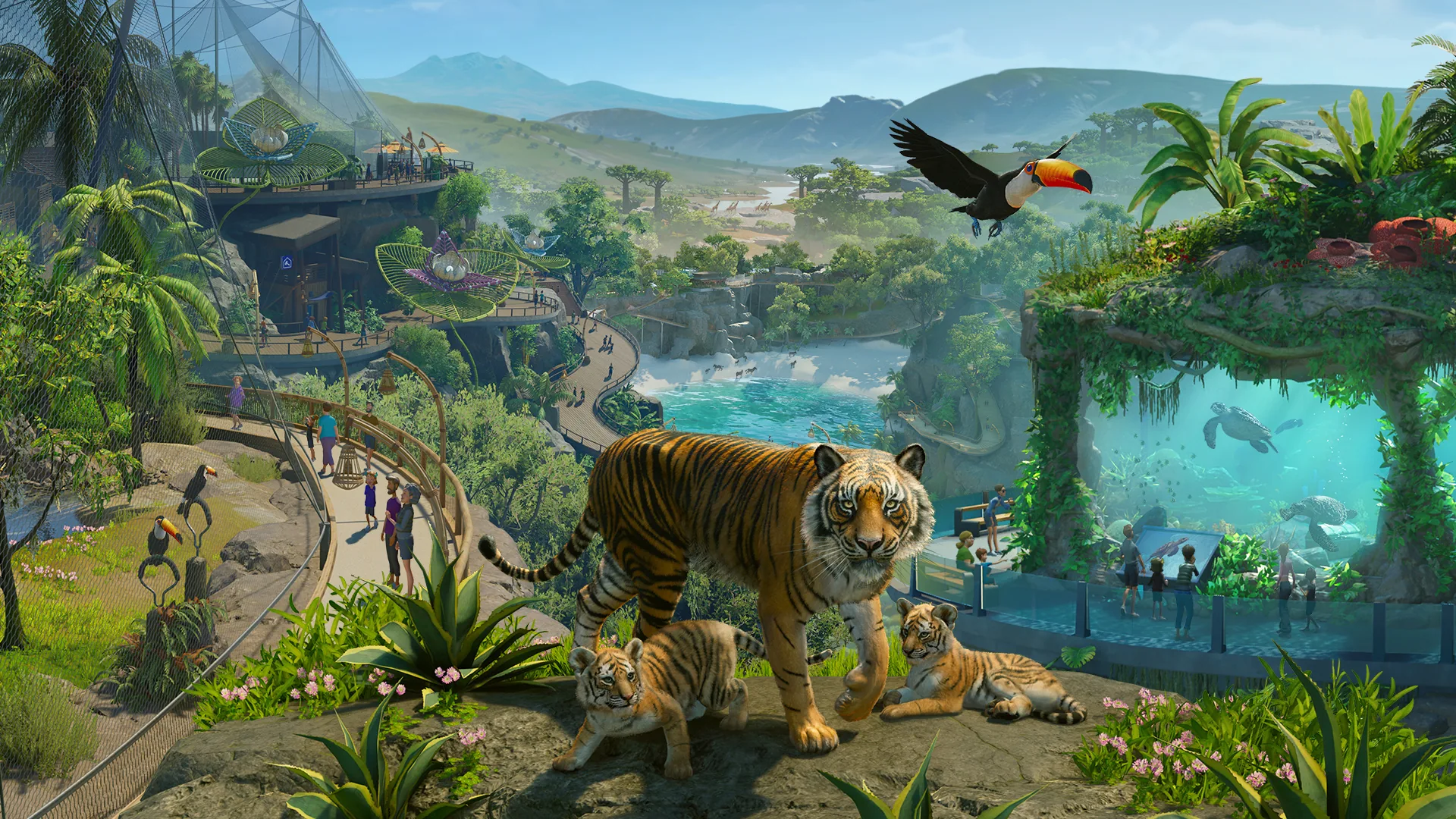
Planet Zoo 2's clearest confirmed additions are fully aquatic animals and aquariums, flying animals and aviaries, and Wildlife Reserves connected to a wider conservation network. Those features make it worth considering if they match the zoo projects you want to build. This is a pre-release assessment dated October 12, 2026, not a scored review or a claim of hands-on testing.
The scheduled release is October 13. Current Steam user reviews were not available at the time checked, and this guide does not establish launch stability, late-game performance, control quality or long-term management balance. Use the confirmed features to assess fit, then evaluate the unresolved technical and gameplay questions through evidence relevant to your platform and intended play style.
Judge the sequel by the projects it enables
The strongest purchase question is whether the new systems support something you actually want to make or manage. A player interested in elaborate aquariums has a more concrete reason to consider the sequel than someone whose only plan is to repeat a familiar terrestrial zoo.
This is an assessment of feature relevance, not a verdict on value for everyone. The available material establishes new systems but does not quantify how much enjoyment, construction time or management depth they will provide. No universal buying recommendation or current price comparison is supplied here.
Name the project first: an aquatic building, a flying-bird collection, a conservation network or a detailed zoo with varied animal behavior. Then identify the confirmed systems supporting it. This makes the decision more useful than comparing trailer impressions without a clear idea of what you want from the game.
Aquariums add a distinct building and care system
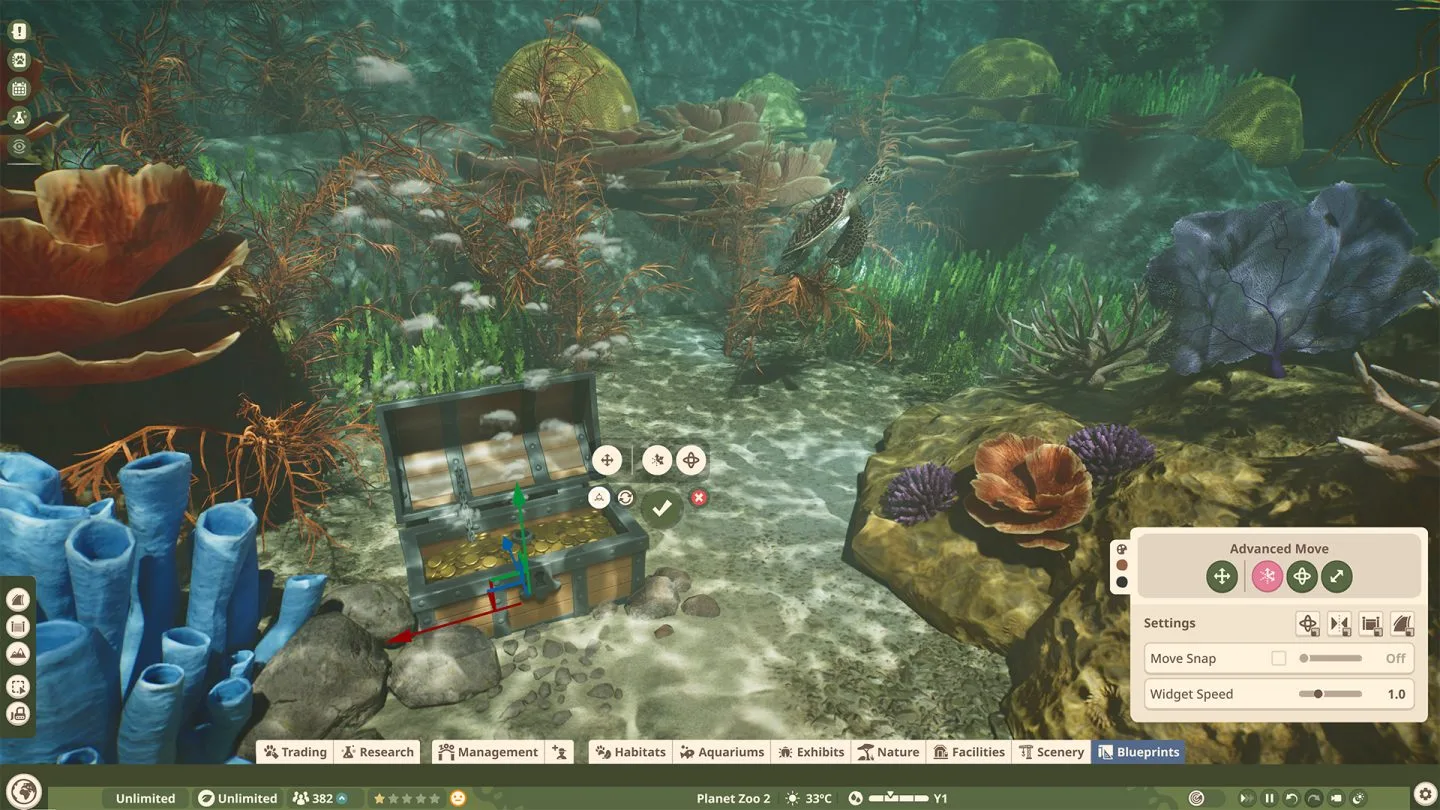
Aquariums are more than an underwater scenery theme. They use customizable barriers, water volume, a staff entrance and water filters. Freshwater, saltwater and brackish conditions matter, and temperature can be controlled through the aquarium staff gate.
Maintenance also has visible roles. Staff dive in to clean windows, while barrier care helps reduce the chance of cracks and leaks. Dirty aquariums affect visibility and can increase disease risk. These confirmed functions give an aquatic project both a construction side and an ongoing care side.
The assessment is that aquariums provide a concrete new kind of exhibit to plan. It does not establish that their management is perfectly balanced or that every aquatic species feels equally distinct in play. Filter capacity, maintenance timing, exact animal requirements and the quality of the final interface still need evidence beyond a feature description.
Underwater viewing creates new design possibilities
Guest gates allow aquarium tunnels through the water. Tunnels can be built at different heights, and aquariums can form multistory or subterranean structures. One-way glass and varied barrier shapes offer other ways to control views.
These options are relevant if you enjoy designing the visitor's perspective as much as the enclosure itself. A tunnel, side window and raised viewing angle can form different experiences around one aquatic collection. That is a creative possibility supported by the tools, not a measured guest satisfaction improvement.
The practical question after release is how comfortably those tools work together in a full project. A confirmed feature does not prove a smooth construction workflow or the absence of awkward edge cases. If aquarium architecture is your main reason to buy, look for evidence of an ordinary build from shell to access and maintenance, not only a polished showcase panorama.
Flying animals broaden the habitat concept
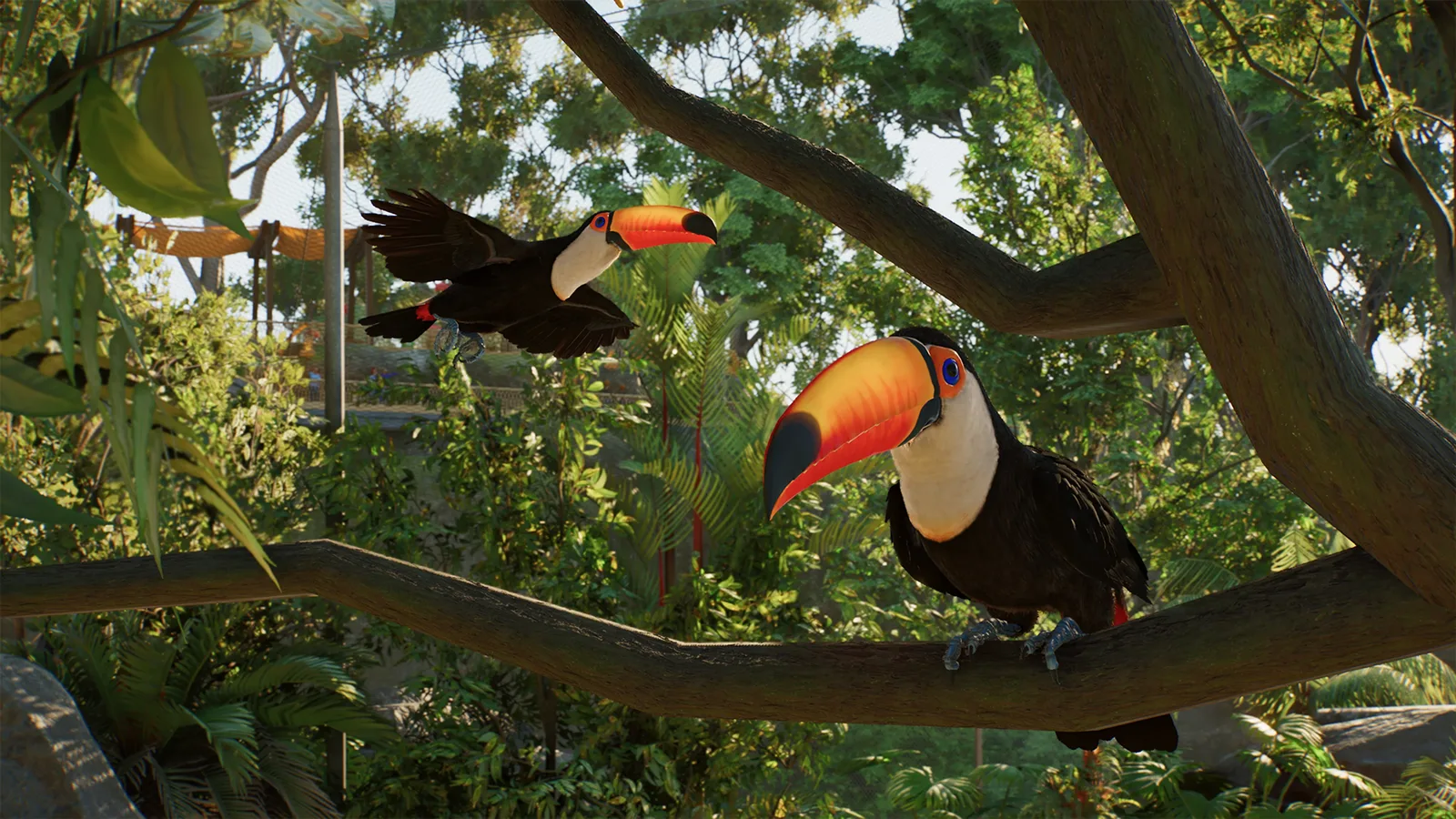
The sequel introduces flying animals with behavior on the ground and in the sky. Aviaries use barriers, support poles and dynamic mesh covers, giving the system its own structural identity.
This matters for players who want a bird collection that can be designed around aerial movement rather than only terrestrial display. The confirmed roster and systems support a different creative goal from building another land habitat with bird-themed decoration.
The available evidence does not establish that every species uses every height or structural arrangement equally well. Nor does it prove that constructing a large mesh-covered aviary is effortless on every control setup. The feature is a clear addition; its practical execution remains something to evaluate through actual building examples. Avoid turning the existence of flying animals into a universal claim that every older bird-related limitation is solved.
Wildlife Reserves expand conservation planning
Wildlife Reserves are customizable natural homes connected to the zoo's conservation activities. The official description includes conservation projects, research and requirements for releasing animals into reserves. A network of zoos and reserves extends the scope beyond one visitor-focused park.
For a player interested in animal care and conservation progression, this is a specific reason to consider the sequel. It provides a different project structure from adding more guest facilities to a single zoo. That assessment is based on the confirmed scope, not a tested judgment of progression pace.
The material available here does not establish every release requirement, research reward or long-term reserve management routine. It would be premature to call the system either shallow or highly demanding without that evidence. Assess whether the conservation direction appeals to you first, then investigate how the actual projects work once complete gameplay information is available.
Animal behavior is a substantial stated focus
Planet Zoo 2 rewrites the animal decision system, with animals considering factors including time, season, weather, internal state and previous actions. The sequel also supports more varied interactions with natural objects and more coordinated group activity.
Those changes are relevant if watching animals is a major part of why you play. The developers describe a wider variety of behavior rather than a narrow repeating sequence of care actions. Objects can be used in varied placements when they are accessible.
This establishes a design direction, not a guarantee about how often a particular animation occurs or how noticeable every improvement will be during ordinary play. A short clip showing a charming moment cannot prove the entire simulation's depth. The useful post-release question is whether varied behavior remains convincing across different species, habitats and longer observation periods.
Visual and audio detail support observation
The animal development material describes rebuilt models, improved rendering materials and more detailed animation layering. Audio is more closely connected to skeletal movement and vocalization, with behavior and mood affecting the sounds animals produce.
For players who spend time observing and photographing animals, that focus is relevant. The confirmed systems aim to make the models and their movement more expressive. They also help explain why a returning species can represent more than simply reusing an old model.
However, visual detail and technical performance are separate questions. A detailed close-up does not establish frame rate in a large zoo, loading speed or memory use. This assessment does not provide benchmark results. If you intend to build a dense late-game park, evaluate evidence from that kind of project on comparable hardware rather than extrapolating from a small scene.
Building improvements need practical verification
The official feature description includes scaling, flexi-color, foliage and terrain brushes, and revised pathing tools. It also includes multiple scenery themes and community content through the Frontier Workshop.
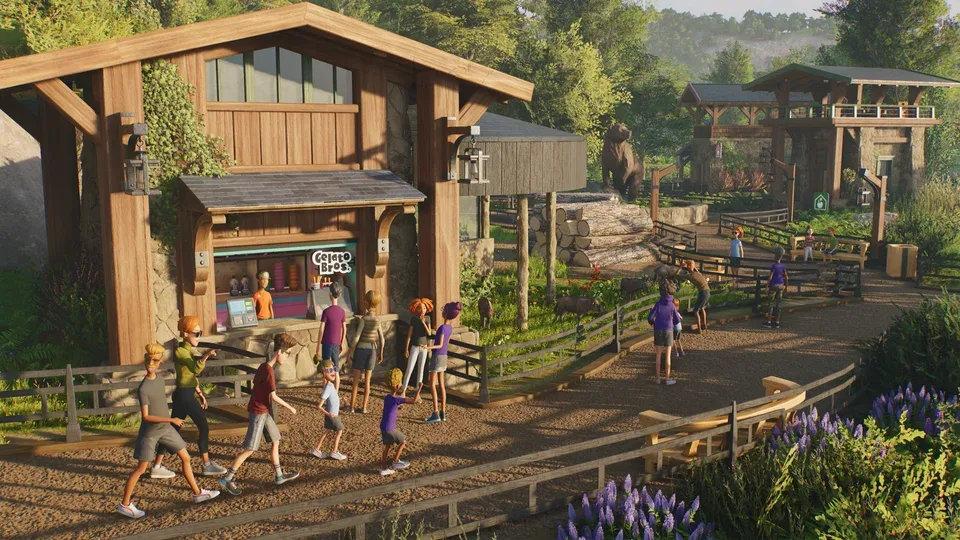
These are useful additions for a creator who wants control over a zoo's overall theme and individual details. A connected community library can provide starting points for buildings and other creations. The confirmed Workshop sharing direction supports using and contributing community work.
The presence of revised tools does not prove that every old pathing frustration is fixed. No hands-on construction test is claimed here. Look for evidence of common tasks such as joining paths, fitting a building to a site and modifying a downloaded creation. A beautiful finished zoo tells you what a skilled creator achieved; it does not fully explain the effort or friction involved in getting there.
Match the game mode to your priorities
The confirmed modes are Career, Sandbox and Franchise. Career follows a globetrotting zoo and conservation adventure, Sandbox emphasizes creative freedom, and Franchise supports a wider network with shared progression and research.
If you mainly want a structured introduction, investigate Career's actual objectives and teaching approach. If you mainly want to build a large personal project, Sandbox is the relevant mode to examine. If a connected long-term network appeals to you, investigate Franchise's progression and management details.
These are fit questions, not tested quality rankings between modes. The available material does not establish how long Career takes, how demanding Franchise becomes or which settings provide your preferred level of challenge. Choose the part of the game most relevant to you and seek evidence about its real workflow instead of relying on a general trailer verdict.
Check species access separately from total roster impressions
The public Zoopedia confirms a diverse set of species and includes content pack markers. For example, the Golden Lion Tamarin is marked Deluxe. The index is also identified as work in progress during this pre-release period.
Do not use an early roster count as a complete buying argument. The animals that matter most to your planned collection may be more relevant than a headline total. Confirm their exact entries and content access before assuming that every public listing belongs to every edition.
This guide does not provide verified current prices or an edition value calculation. A content marker answers an inclusion question and cannot by itself justify an upgrade recommendation. Keep the species you want, the content needed and the unresolved gameplay or technical questions in separate parts of your comparison.
Keep the unresolved review questions concrete
The important unknowns are launch stability, platform-specific controls, performance in large zoos, the comfort of common construction tasks and long-term management balance. None of these is resolved by a feature being announced.
A useful review comparison should show what was played, on which platform and under what conditions. Evidence from a small showcase may be informative about appearance while saying little about a dense park. A limited preview can provide observations without becoming a full assessment of every mode.
Avoid assigning a score from the confirmed feature list alone. The score would imply a level of testing this guide does not have. You can still make a clear decision about interest: the aquatic, avian and reserve systems either fit your intended projects or they do not. Keep that feature-fit assessment separate from a final verdict on execution.
Make a decision that matches the evidence
Consider Planet Zoo 2 most closely when one of its confirmed new systems supports a specific project you want to build or manage. Aquariums, aviaries and reserves are the strongest examples because each changes the kind of space or network you can create.
If your decision depends on smooth controls, a solved construction problem or reliable performance at a particular scale, wait for evidence addressing that exact condition. This is a targeted decision method rather than a blanket recommendation to buy or avoid the game.
As of this pre-release assessment, the feature direction is clear and the final quality remains unscored. The next useful evidence is ordinary gameplay completing the tasks you care about, with the platform and project scale stated. That is what turns an appealing feature list into a meaningful personal purchase judgment.