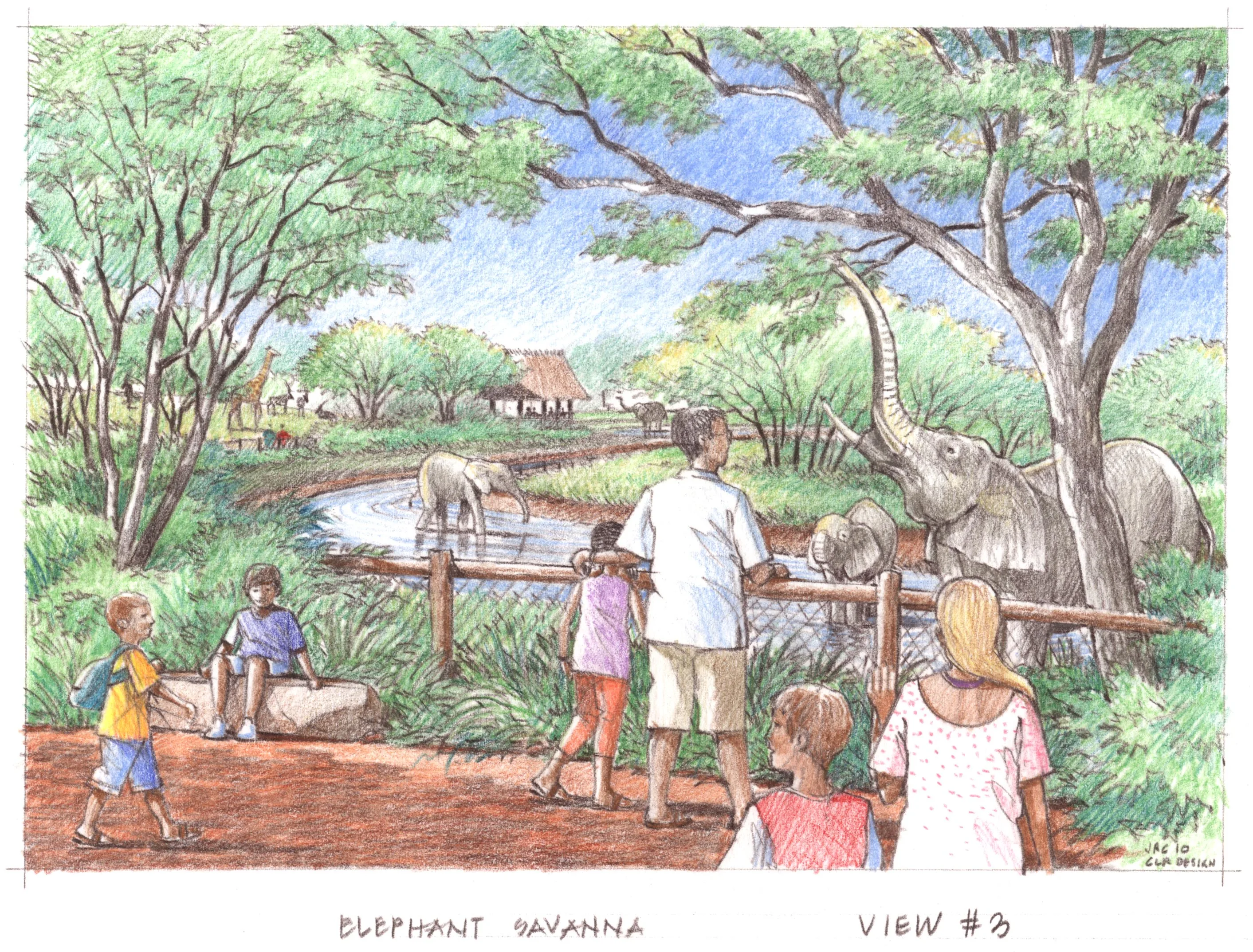
Planet Zoo 2 animal welfare depends on each animal's access to food and water, sufficient space, suitable terrain and plants, and a fulfilling social and enrichment environment. Begin with the individual animal's requirements and the condition that is not being met, then make a targeted habitat or care change. As of 12 October 2026, the game is unreleased, so exact launch-build thresholds and interface procedures remain unverified. The diagnostic workflow below uses confirmed welfare systems without inventing universal percentages or species rules.
A habitat can look natural while missing an essential need. Equally, one unhappy animal does not prove that every animal in the enclosure needs the same correction. Work from the affected individual to its species requirements and then to the habitat or support system. This keeps a manageable problem from becoming an expensive redesign based only on appearance.
Read the animal before changing the habitat
Choose an affected animal and identify the unmet condition using the information available in the game. The point is to distinguish a food issue from a space issue, a social mismatch, or an unsuitable environment. Do not assume that a low overall result describes one particular cause.
Check the species requirements rather than applying a generic zoo standard. Planet Zoo 2 gives animals different welfare needs, and the Zoopedia supports habitat planning. The same enclosure can be appropriate for one inhabitant and inappropriate for another.
For a mixed group, inspect the animals separately. Selective compatibility between species does not imply that their care requirements become identical. One animal's good condition cannot certify every member of a shared habitat.
Write a short description of the problem in actionable terms. For example, the inspection may show that the animal needs more flying space, while a different animal needs a suitable nesting site for reproduction. These lead to different changes. The value of a checklist is its ability to isolate the missing condition rather than producing a long list of purchases.
Check essential access before adding decoration
Food and water are basic confirmed requirements. Their presence in a visually attractive enclosure does not tell you everything about whether the animals can use them. Review the care arrangement and the relevant animal information before deciding that another decorative item is the answer.
Keepers feed and care for animals. Facilities and staff organization therefore belong in a welfare investigation when the problem appears connected to daily care. The habitat's appearance cannot substitute for a support network that allows the relevant work to take place.
Use a simple observation sequence: identify the affected animal, inspect its need, review the resources intended to meet that need, and review the care support. This is a proposed diagnosis method rather than an unverified series of interface clicks.
The animals' behavior can draw attention to a problem. The sequel's animal systems can produce vocalizations related to welfare and mood; animals lacking enough food may vocalize, and that reaction can spread through the group. Treat the sound as a reason to inspect the animals, not as a complete numerical diagnosis.
Avoid immediately expanding an enclosure when the animal's missing need concerns food or water. More space does not itself explain or correct every care failure. Fix the issue you can identify and then check whether the animal's condition improves.
Evaluate space in the correct form
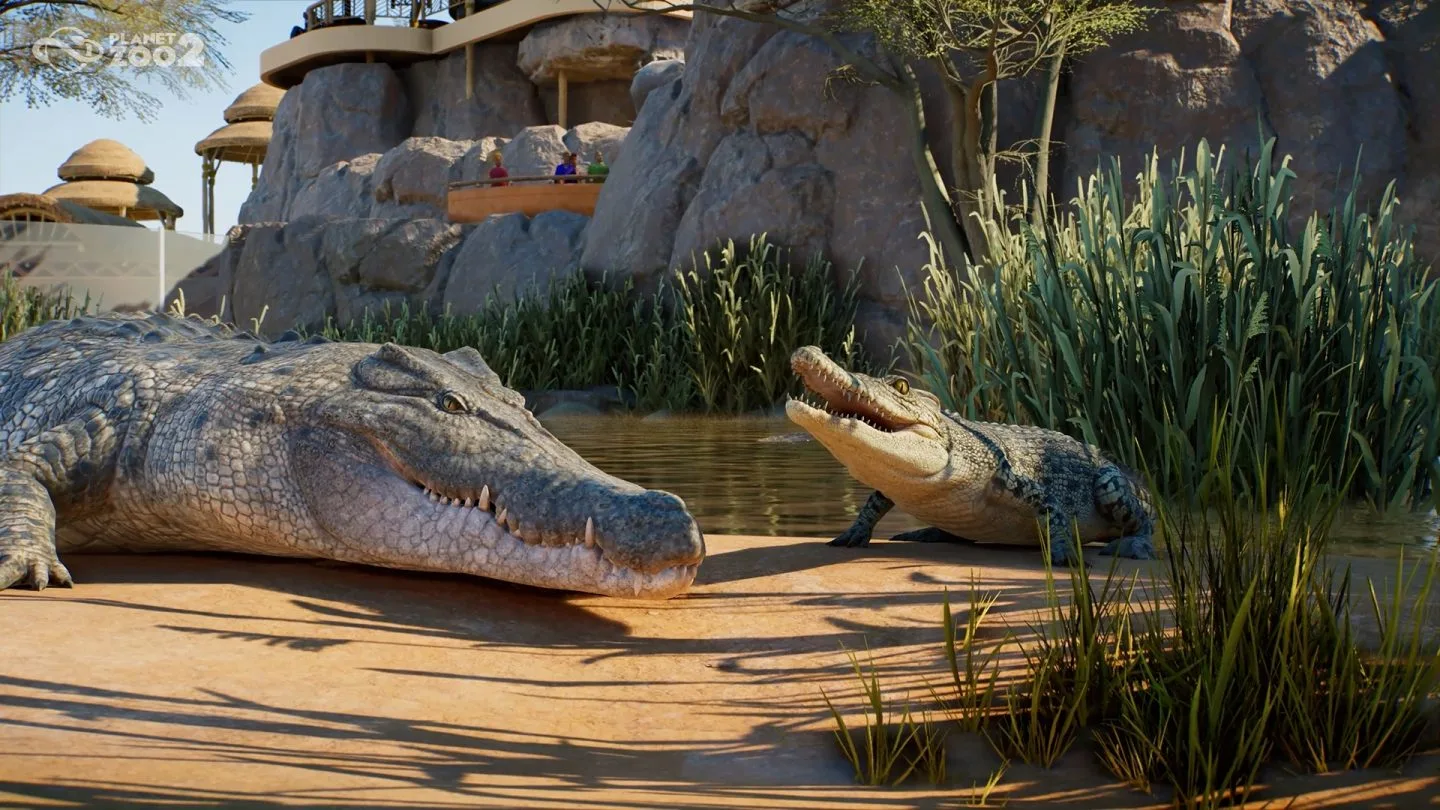
Sufficient space is part of welfare, but animal types do not all use space in the same way. Flying birds require appropriate flying space. Their requirements appear in the Zoopedia, and the aviary Info Panel reports Flyable Area. Roof height and habitat expansion can be adjusted if more flying space is needed.
This illustrates an important diagnostic principle: check the measure that applies to the animal. A large ground footprint is not automatically sufficient air space. Similarly, a beautiful view of a habitat cannot establish every space requirement from a screenshot.
Do not replace the species requirement with an invented universal minimum. The provided material confirms the need for space but does not supply a verified table of every animal's launch values. Read the actual species information when selecting a remedy.
If a structural change is necessary, compare the relevant reading before and after it. Changing one major feature at a time helps you understand the result. An enclosure that becomes larger and more elaborate in several ways may improve, but it becomes harder to determine what was missing.
Preserve some flexibility in the surrounding layout where possible. Welfare corrections are easier to carry out when the habitat is not trapped between finished buildings and tightly packed scenery. This is planning advice, not a claim about a minimum buffer around every enclosure.
Match terrain and plants to the species
Suitable terrain and plants are confirmed elements of animal welfare. Choose them according to the animal's requirements, while using visual themes as a separate creative decision. The fact that a habitat looks tropical, rocky, or grassy does not establish that it meets the needs of its inhabitants.
Start with the main environmental conditions and review the animals before dressing every surface. A layer-by-layer approach makes it easier to understand which part of the habitat is functional and which part is decorative.
Planet Zoo 2 supports improved terrain tools and natural scenery, including a nature brush. These help create varied environments, but the existence of a creative tool does not mean any output from it satisfies an animal automatically. Inspect the resulting environment against the needs of the chosen species.
For shared habitats, consider whether all inhabitants can use an environment that meets their separate needs. Do not generalize from real-world geographic similarity alone. Species compatibility and habitat requirements must both be checked in the game.
When you change terrain or add large features, revisit the overall care arrangement. A redesign can affect the places where you intended animals to move, rest, or use resources. The safe evaluation method is to review the resulting habitat rather than rely on its previous state.
Review social and enrichment conditions
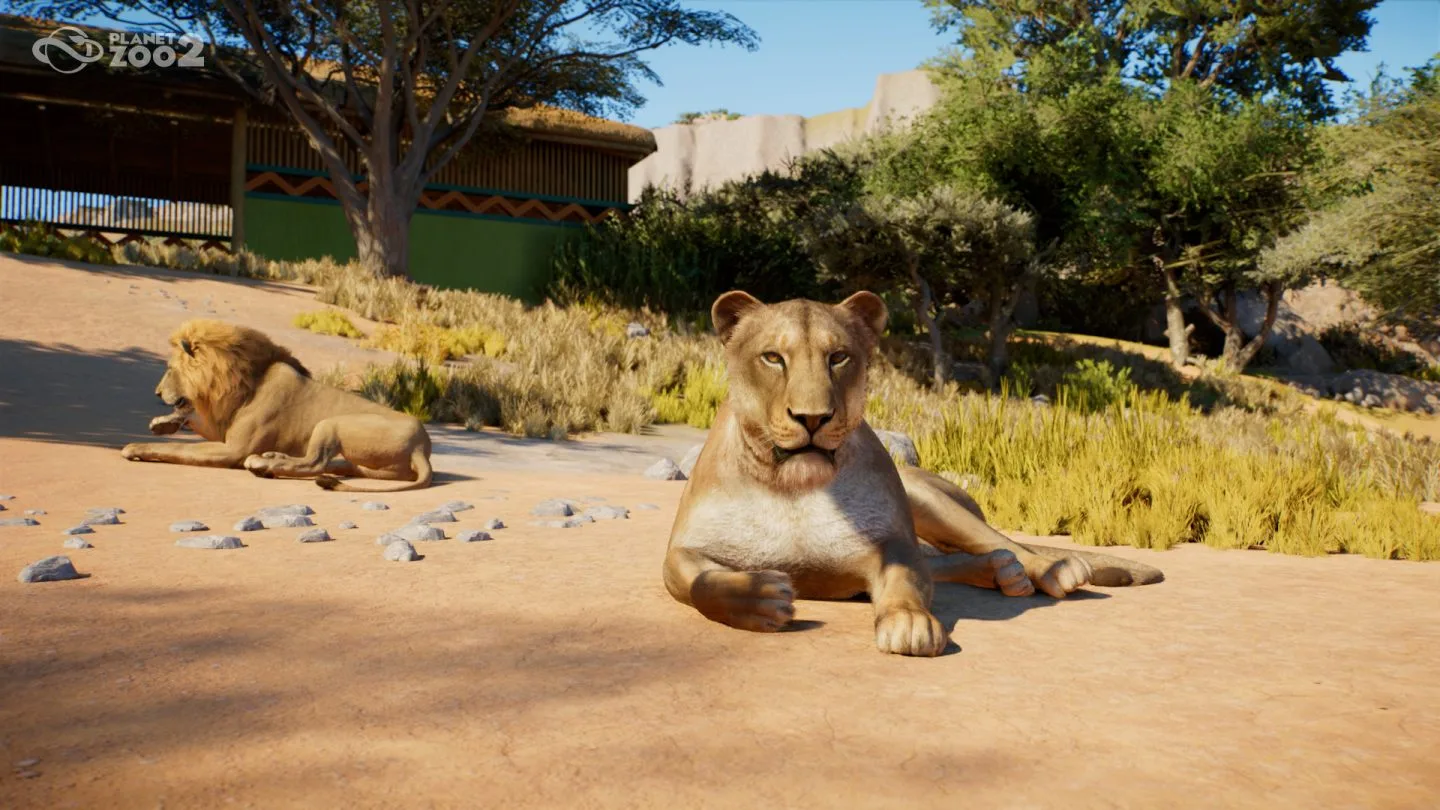
Animals need fulfilling social and enrichment environments. The appropriate arrangement depends on the species, so a decorative collection of objects is not a universal solution. Check what the animals require and what they can actually use.
The sequel's animals interact with their surroundings in more ways than before. Some natural objects can be eaten from, rubbed against, or used for scratching when accessible. These behaviors make natural habitat composition relevant, but they do not establish that every branch or rock is interchangeable with every enrichment requirement.
Fear can also affect behavior. An animal encountering something frightening may avoid it, and frightened animals can become less likely to use enrichment objects. If an apparently suitable object goes unused, investigate the animal's condition and the surrounding arrangement before assuming that the item is defective.
Social behavior is more dynamic in Planet Zoo 2. Groups can be encouraged to perform actions together, with interactions and reactions emerging from the animals' decisions. Watching those behaviors is useful, but a pleasing group animation should not replace the specific welfare checks.
Use social observations to decide where to investigate. A habitat that appears quiet is not necessarily unsuitable, and a lively habitat is not automatically healthy. Requirements and current animal information remain the foundation of the diagnosis.
Balance good viewing with retreat space
Guests want a clear view of animals, but animals need opportunities to hide from view and avoid stress. Both requirements are confirmed, so maximizing visitor proximity everywhere is not a complete welfare plan.
Consider the viewing route as one part of the habitat. Give visitors meaningful places to observe animals while keeping the animal environment from becoming a continuous display corridor. This is a design principle rather than a verified rule for a particular distance or barrier type.
If welfare problems appear after a viewing redesign, review the animal's condition and how the new arrangement exposes it to guests. Avoid assuming that every stressed animal needs a specific predecessor item such as one-way glass. The appropriate correction should come from the sequel's requirements and the actual issue.
The same balance matters for walkthrough aviaries. Some birds tolerate guests inside their habitat, while shy species require suitable space and conditions. Check the species information before treating an internal guest route as an improvement.
A scenic retreat can also support the visual composition of the habitat. You do not need every part of the enclosure to be equally visible from every path. A strong view and an appropriate place to withdraw can coexist in the plan.
Include staff and facilities in the diagnosis
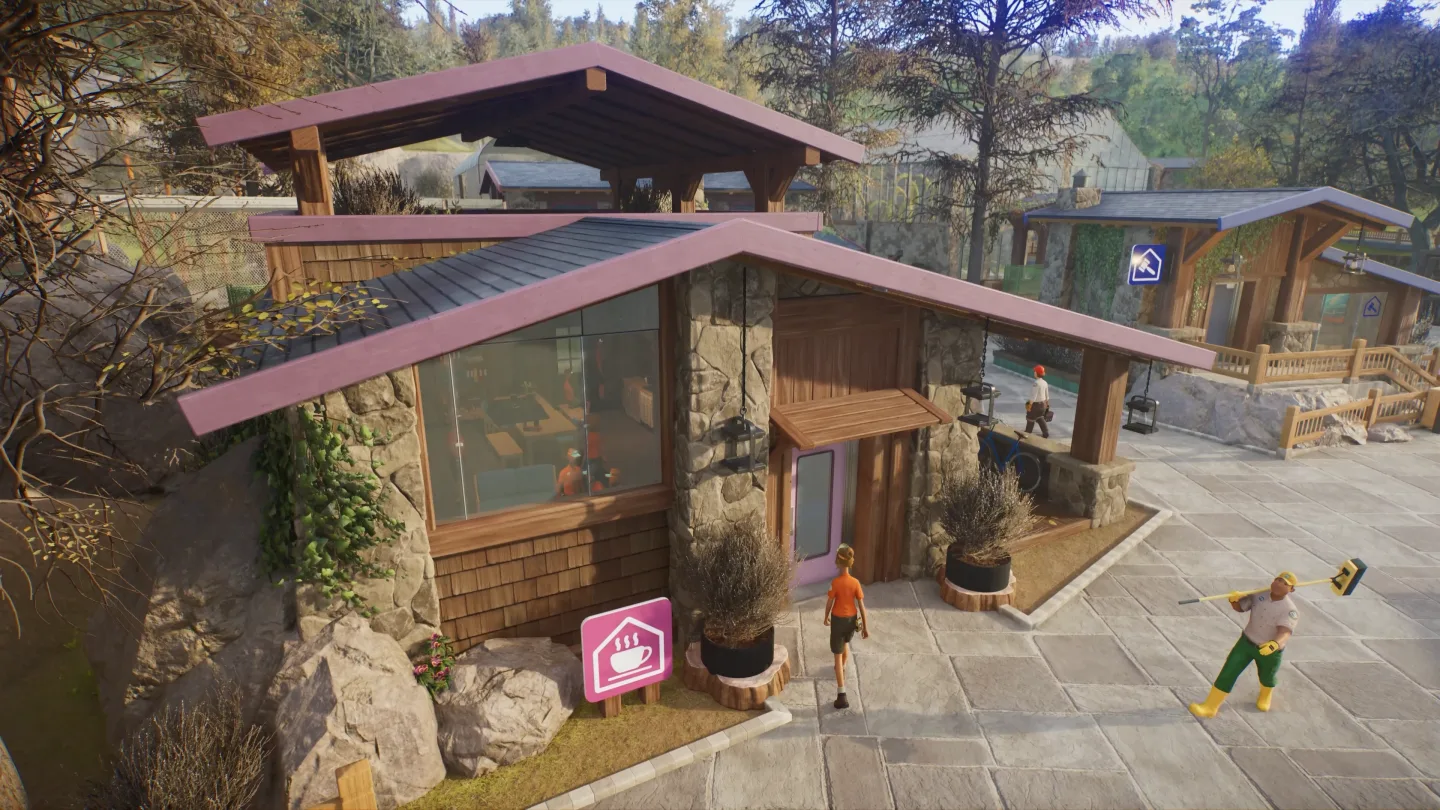
The care network is part of a functioning habitat. Keepers care for animals, vets treat sick animals and conduct research, and mechanics maintain habitats and facilities. Their jobs are distinct, so identify the relevant support instead of hiring an arbitrary extra employee.
Work Zones can divide a zoo into manageable chunks. Review whether the organization of the current zoo makes sense and whether workloads are manageable. Staff satisfaction depends on pay, training, and workload, and dissatisfied employees may quit.
Facilities may require power, while habitat water can depend on filters and pumps according to what you build. Consider the support demands of the habitat type during planning and when diagnosing a problem. Do not assume that a completed facade proves the underlying services are functioning.
Staff buildings no longer need to be hidden from visitors merely to avoid the predecessor's planning assumption. Guests can enjoy seeing vets and keepers at work. This makes it possible to arrange a visible, scenic support area near the habitats it serves.
Avoid reducing welfare care to a staffing ratio unsupported by the game material. No universal keeper-per-habitat or vet-per-animal number is established here. Inspect the jobs and workload information actually available in your zoo.
Separate welfare recovery from Thriving
Thriving is a new state beyond meeting an animal's ordinary welfare needs. It requires species research and extra attention to a natural, enriching environment. Thriving animals live longer and encourage guests to donate more.
If an essential welfare need is missing, correct that first. Researching toward Thriving does not justify leaving food, water, space, or social needs unresolved. The distinction helps prioritize the problem you are solving right now.
There is no confirmed universal Thriving score or one-item shortcut in the provided material. Do not assume that a high-looking welfare result means the state is automatically achieved. Treat the animal's actual status as the relevant feedback.
A welfare improvement can be worthwhile even before Thriving is reached. Guests dislike welfare problems; sufficiently poor care may attract protesters who can upset visitors enough to make them leave. Responsible care supports the zoo's operation as well as the animals themselves.
Check whether the correction solved the original problem
After changing the habitat or support arrangement, return to the same animal and the same condition you identified at the beginning. Compare the result rather than moving straight to another construction project.
If the condition remains unresolved, ask whether the change addressed it directly. A larger roof responds to flying-space needs; it does not necessarily fix an inaccessible resource. Additional scenery can improve an environment, but it is not evidence that the animal's required terrain or social conditions are now correct.
If several animals are affected, repeat the review for each relevant species and individual. Shared surroundings can create a shared problem, but individual differences still matter. Do not declare the entire habitat fixed because one selected animal appears better.
Keep successful changes simple and understandable. A clear record of the missing need, the targeted correction, and the resulting condition gives you a repeatable method for the next habitat. The useful endpoint is appropriate care verified through the game's animal information, with observation supporting that assessment.