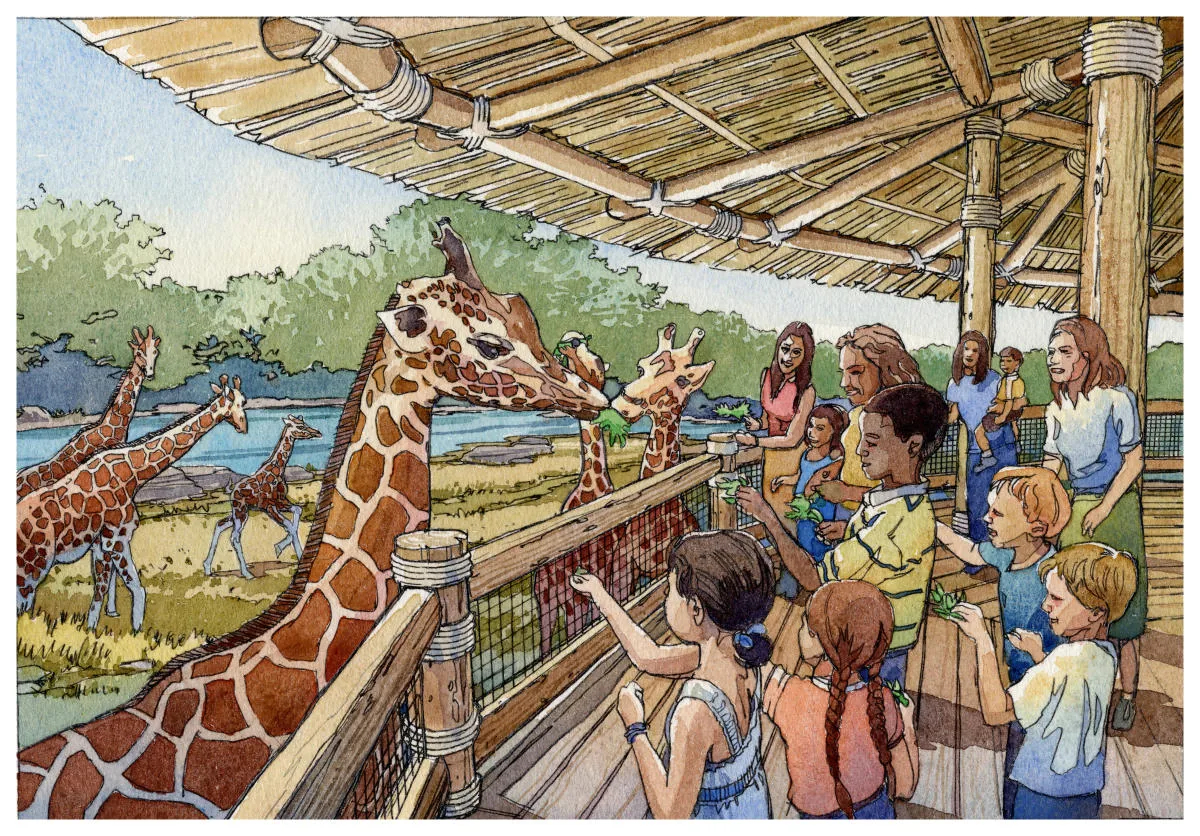
The clearest confirmed way to increase donations in Planet Zoo 2 is to help animals reach the new Thriving state. Thriving animals encourage guests to donate more as visitors appreciate the care you provide. Research is a prerequisite, and the animal needs a natural, enriching environment beyond ordinary welfare. As of 12 October 2026, the game is unreleased, so exact donation multipliers, optimal donation-object placement, and a guaranteed income formula cannot yet be verified. Start with the animals' actual condition and inspect the resulting donation trend.
Donations are one part of the zoo's finances, alongside adjustable admission, visitor spending, and other options. Improving them should have a clear purpose: supporting a functioning zoo through better animal care and a worthwhile visitor experience. It should not become a reason to copy an unverified predecessor money exploit or neglect essential services.
Begin with the confirmed donation benefit
Thriving provides two explicitly confirmed benefits: animals live longer and guests are encouraged to donate more. This establishes a connection between higher animal care and donations. It does not establish that any one item produces an immediate fixed increase.
To pursue Thriving, invest in species research and go further in creating a natural, enriching environment. The individual animal's resulting state is the relevant check. A research project or a beautiful enclosure alone is not proof that the intended condition has been reached.
Prioritize a species you already keep when planning an initial improvement. This is a suggested way to evaluate the feature in an existing habitat, not a claim that a particular animal gives the best donation return. Species rankings and exact financial payback need evidence from the game.
Keep the financial expectation realistic. Increased encouragement to donate is confirmed; a precise amount per guest or per animal is not. Judge the change through the information available in your save rather than presenting an assumed multiplier as a measured result.
Fix ordinary welfare before pursuing generosity
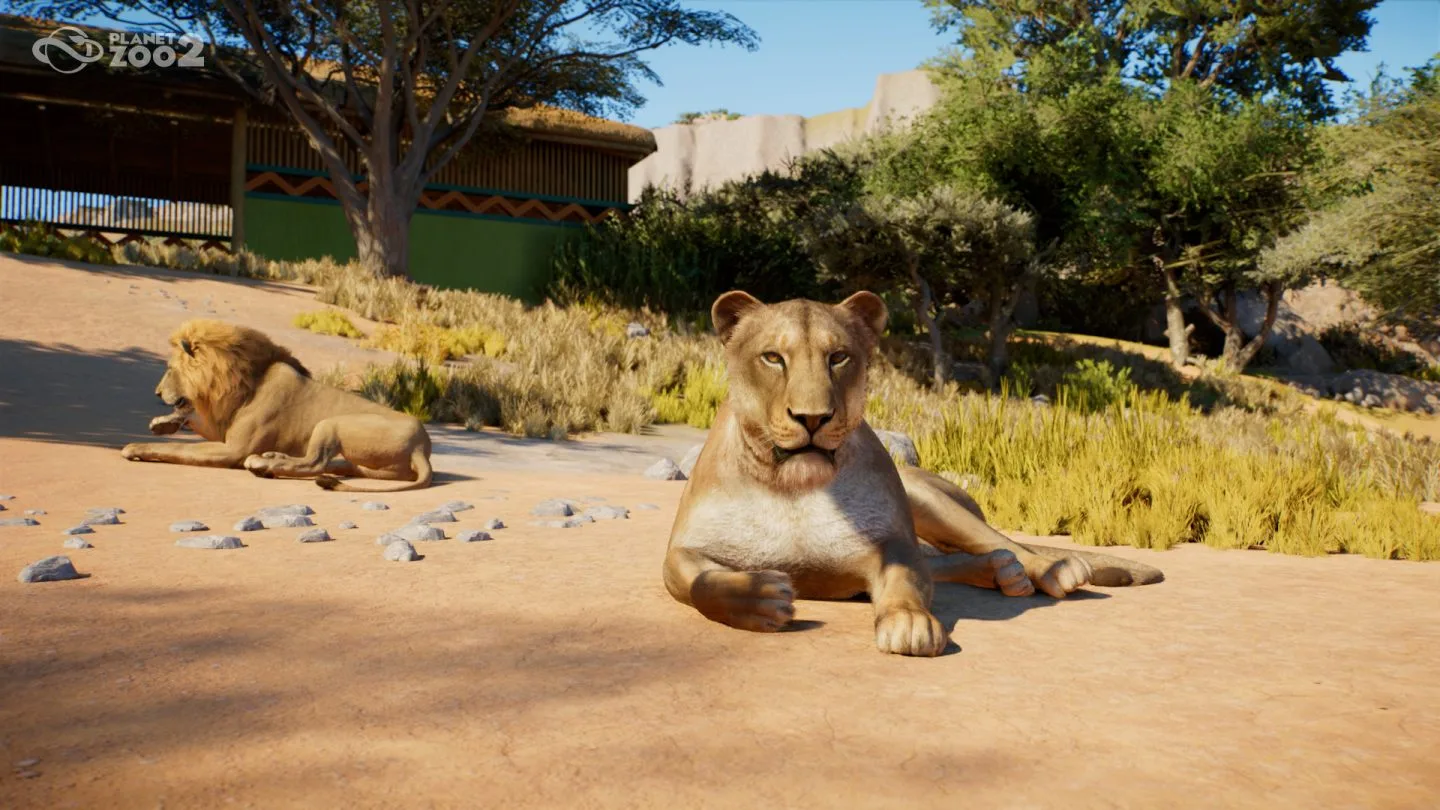
Animals need food and water, adequate space, suitable terrain and plants, and appropriate social and enrichment conditions. These ordinary welfare requirements remain the foundation of a donation-focused improvement.
Guests dislike seeing welfare issues. Poor enough welfare can attract protesters, whose presence may upset other visitors enough that they leave. This gives you a clear reason to fix a problem before investing in more ways to attract attention to the habitat.
Inspect the affected animals and identify the missing need. If the issue is flying space, use the aviary's Flyable Area and the relevant Zoopedia requirements. If daily care is lacking, review the resources and support intended to provide it. Match the remedy to the problem you can identify.
Avoid assuming that adding a donation object solves poor care. The supplied material does not establish an object-placement recipe, and a visible mechanism for giving money would not itself fix the animal's welfare. Start with the condition that visitors are reacting to.
Review each species in a mixed habitat. An appealing group scene can hide differences between inhabitants' needs. Good care for one animal is not proof that every animal in the display is ready for a higher welfare goal.
Research a specific care improvement
Vets conduct animal research, unlocking new items and improved welfare options. Research also helps you understand what the species needs in the wild, which is the confirmed first step toward Thriving.
Make the research priority concrete. Identify the species and habitat you intend to improve, then inspect the options that become available. This is more informative than spreading effort across many animals without a clear plan for using the results.
Do not import the predecessor's exact research levels, enrichment unlocks, or donation assumptions. The sequel's current progression needs to determine the choices. A familiar animal or item name does not establish an identical mechanic.
The Planet Hub can manage research across locations within the current game mode. If you run more than one zoo, examine the current research situation before assuming that every location must repeat the same work. The feature description does not establish a complete rule for moving progress between different modes.
Keep the expected animal result separate from the expected donation result. First establish whether the research and habitat change produced the intended care state. Then evaluate the finances. This gives you a clearer interpretation if one part changes while the other does not.
Provide a view that reflects the care you have built
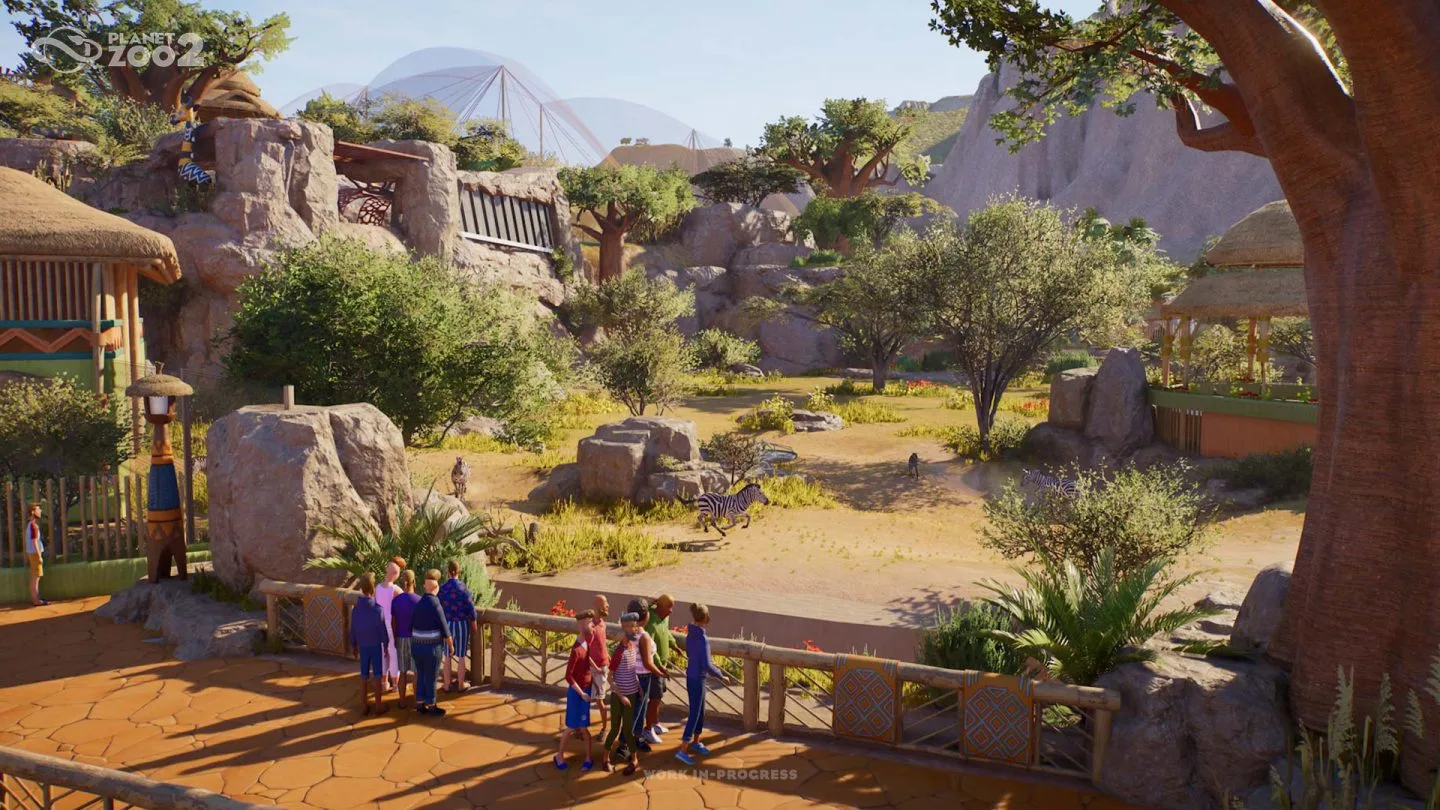
Guests want a good view of animals and are interested in learning about them. The habitat can be well cared for while its visitor route still gives an unclear or weak view. Review the viewing arrangement alongside the care improvement.
Choose a meaningful focus for each observation point. Visitors might see an open landscape, animals at a perch area, or an aquarium window. This is a design proposal rather than a verified rule about a particular viewing radius or donation range.
For flying birds, elevated walkways can help guests see birds that perch or fly above ground-level routes. Such walkways may be inside or outside the aviary. Check species suitability before choosing an internal walkthrough route.
Balance this with retreat. Animals need opportunities to hide from guest view and avoid stress. Trying to maximize donations by exposing the entire enclosure to close viewing may undermine the care goal that supports Thriving.
The useful viewing check follows the route from the visitor perspective. Can the intended animal experience be understood from this point? Is the view framed by the habitat rather than blocked by the decorative elements around it? These are design questions you can assess without claiming an unverified donation formula.
Support education without inventing a multiplier
Planet Zoo 2 includes animal talks given by Educators, education items such as speakers, boards, and webcams, and tours. These support guests who want to learn about the animals.
Education is a confirmed part of zoo management and contributes to the Guest Education component of Zoo Reputation. The provided material does not establish an exact donation increase from a particular board, talk, or tour. Treat education as part of a worthwhile visit rather than attaching unsupported percentages to it.
Place educational opportunities according to the attraction and route you are designing. A coherent area helps connect the information with the animal experience. The best arrangement should come from the zoo you build and the feedback it provides.
Avoid filling every available surface with educational objects solely because an old guide said it increased income. Check the sequel's options and the relevant guest information. A donation-focused guide should distinguish a confirmed benefit from a plausible but unmeasured design contribution.
If you change education and animal care at the same time, it becomes harder to identify why a donation trend changed. Consider improving one aspect, checking it, and then refining another. This is a comparison method rather than a mandatory game order.
Keep the whole visit comfortable
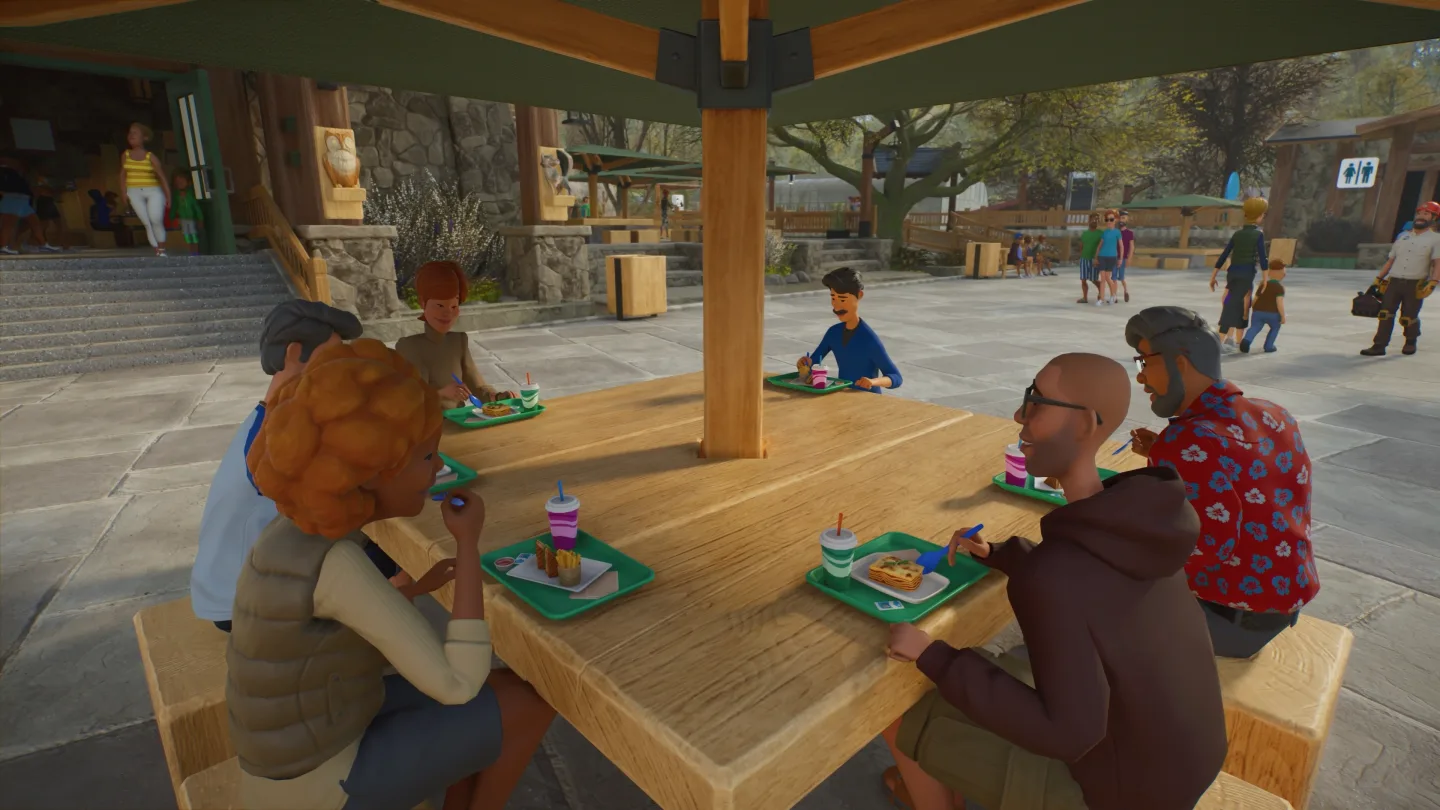
Visitors need food, drink, toilets, and places to rest. Unhappy guests may leave early or ask for a refund. Those confirmed consequences matter to the zoo even if your immediate goal is donation income.
Review services along the route to the animals you are improving. A facility elsewhere in the zoo does not prove that this area provides a comfortable visit. Use the actual guest information to decide whether a need is missing.
Do not assume a universal service spacing or ideal number of benches. Those numbers are not established here. Build a clear, manageable visitor area and expand it when the current experience demonstrates a need.
Scenery can improve staff and guest happiness. Use it to make service areas feel coherent, but keep the functional arrangement readable. A highly dressed plaza is not evidence that food, drink, toilets, and rest are all being provided effectively.
Donations should be evaluated within this wider experience. If visitors leave dissatisfied, a care improvement may not produce the overall financial result you expected. Inspect the relevant animal and guest conditions rather than assuming the donation system itself has failed.
Evaluate the improvement with a clear comparison
Before changing the habitat, note the donation information available in your zoo and the animal's current state. After the care improvement, check whether the intended state changed and whether the donation trend differs.
Keep other major changes limited during the comparison when practical. Raising admission, launching marketing, adding animals, and expanding guest services all at once changes the wider financial context. Even a better donation result would be harder to attribute to one cause.
A simple record can contain the species, the care condition you addressed, the result shown for the animal, and the observed donation trend. Where a number or relationship is unknown, leave it unknown rather than filling the gap with a confident estimate.
If donations do not increase as expected, begin by checking whether the animal actually reached Thriving. Then review welfare, viewing, and guest experience. Do not assume every research completion automatically produces the state or every pleasant-looking habitat qualifies.
Attendance alone does not prove a donation improvement. A paid marketing campaign can bring more visitors, but it also costs money. If you use marketing, evaluate that financial result separately from the question of whether care encourages more generous support.
Avoid unverified donation-object recipes
Queries about Planet Zoo donations often return advice for the original game, including specific donation-box placement. That material can reveal the kind of help players want, but it cannot establish the sequel's exact objects, range, effectiveness, or interface actions.
Use the actual donation options available in Planet Zoo 2 when the game launches. This guide does not claim that a predecessor object is absent; it simply does not treat its old placement rules as a verified sequel recipe.
The same caution applies to money-farming strategies. A technique based on predecessor breeding rates, exhibit sales, or butterfly income does not establish a donation strategy for this game. Focus on the confirmed care benefit rather than a speculative exploit.
Keep the distinction clear when evaluating new information. A screenshot that shows a donation option would confirm its existence in that context, but would not by itself establish an optimized placement formula or causal income increase.
Budget the project as an improvement to an existing zoo
Care improvements, research support, and habitat changes use resources. Staff salaries and energy bills are recurring costs, while expansion and animal adoption spend from your cash balance. A donation project should fit the operation you can sustain.
Choose the next improvement according to a known need or a clear researched option. Do not rebuild every habitat at once around a donation goal whose exact return you have not measured. A focused project gives you a useful result to learn from.
After success, adapt the method to another species rather than copying every object and dimension. The next animal may have different environmental, social, or space requirements. A repeatable diagnosis is more useful than a universal decorative shopping list.
The practical endpoint is verified better care, an appropriate animal state, and a visitor experience that supports the zoo. Donation changes should be reported from actual in-game information. The confirmed reason to pursue Thriving is clear, while exact returns remain a question for the zoo you build.