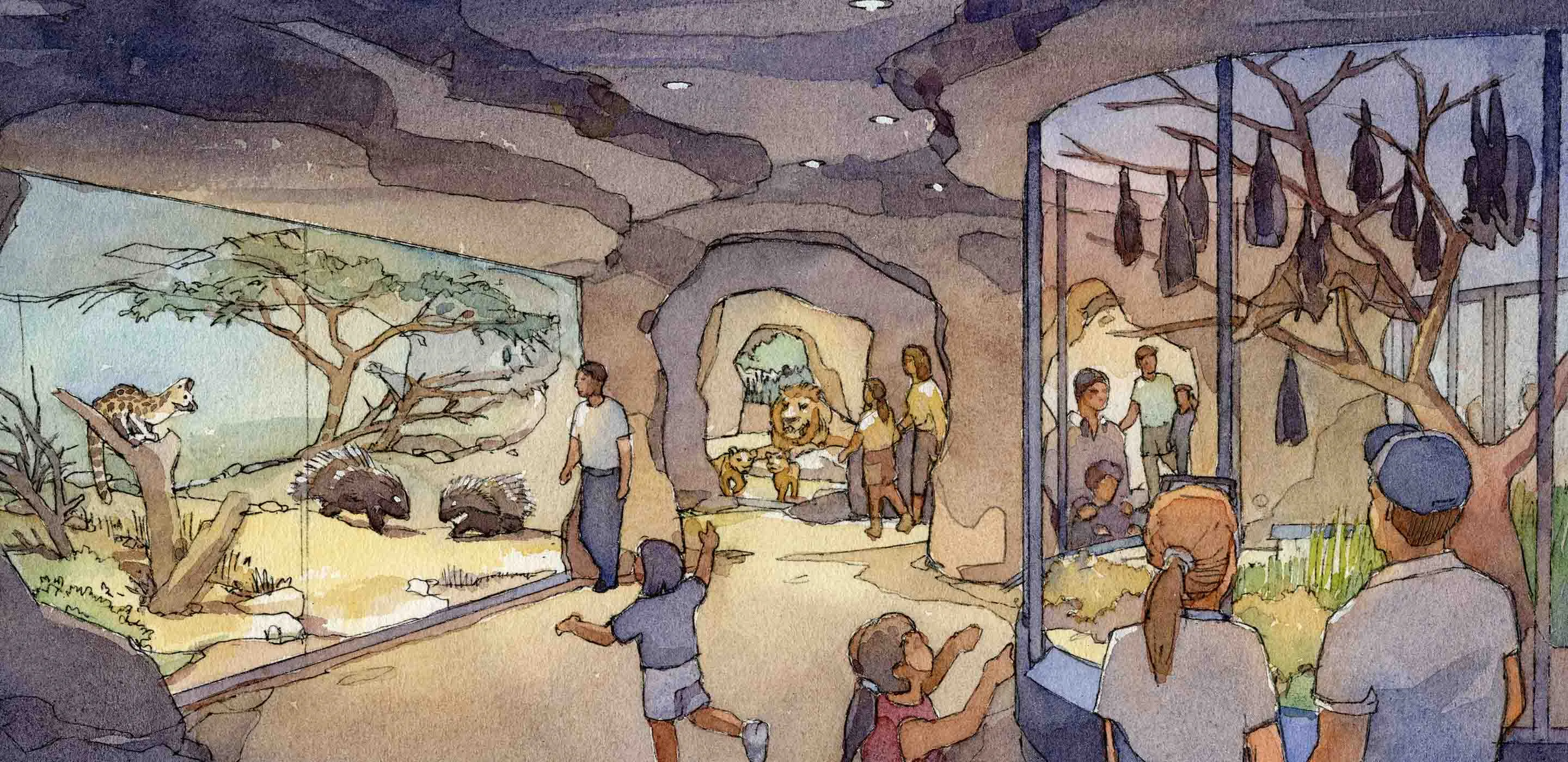
Planet Zoo 2 Franchise mode animals belong to a global network of zoos and Wildlife Reserves with shared progression, research, and other network management. The Planet Hub lets you manage locations, trading, storage, and research within your current mode. Choose animals around the habitats and care your network can actually support, then inspect the current acquisition options in the game. As of 12 October 2026, the game is unreleased, so live animal availability, market prices, and mode-specific unlock conditions cannot yet be verified here.
A Franchise plan should answer where an animal will live, what care it needs, and what role it serves in the network. It should not begin with a supposed best species list based on predecessor trading prices or breeding profits. The confirmed systems give you a way to organize the network; they do not establish every detail of the launch economy.
Understand the network before selecting more animals
Franchise mode supports a global wildlife network of zoos and Wildlife Reserves. Shared progression and research are part of its confirmed direction. The Planet Hub provides a central way to see and visit locations and manage relevant network systems.
The Hub can be opened while playing, without leaving the current save for the main menu. It supports trading, storage, and research across locations within the current game mode. This makes network-wide planning part of the normal management flow.
The phrase 'within the current game mode' matters. Do not assume that progress or animals transfer freely between Career, Sandbox, and Franchise. The provided material does not establish a complete cross-mode transfer rule.
Before choosing the next animal, inspect what already exists in your Franchise network. A species may fit an established habitat plan or a research priority better than a completely new branch of the collection. That is a suggested planning method, not a claim that shared research removes every local cost or requirement.
Separate roster membership from current availability
A species appearing in the game’s roster does not by itself establish when or how it can be obtained in a particular Franchise save. Current acquisition options, edition access, progression, and market conditions need to be checked in the actual game.
This guide does not provide a fabricated Franchise availability list. Pre-release community counts and wishlists are not sufficient evidence of every launch species or mode-specific acquisition rule. Use the current Zoopedia and the available in-game options for the animals you intend to keep.
Likewise, a screenshot of a species proves less than a complete acquisition workflow. It can help identify the animal and its presentation, but it does not establish a trading price, starting availability, or unlock requirement.
Keep a simple distinction in your own plan: animals you want, animals you can currently acquire, and animals you can currently house responsibly. A species becomes a sensible addition when those practical conditions align, rather than simply because it is a favorite.
Avoid predecessor market assumptions. A valuable breeding species or cheap opening animal in the original game is not automatically the same in the sequel. Read the current costs and options instead of transferring a familiar profit strategy without evidence.
Prepare the habitat before committing to the animal
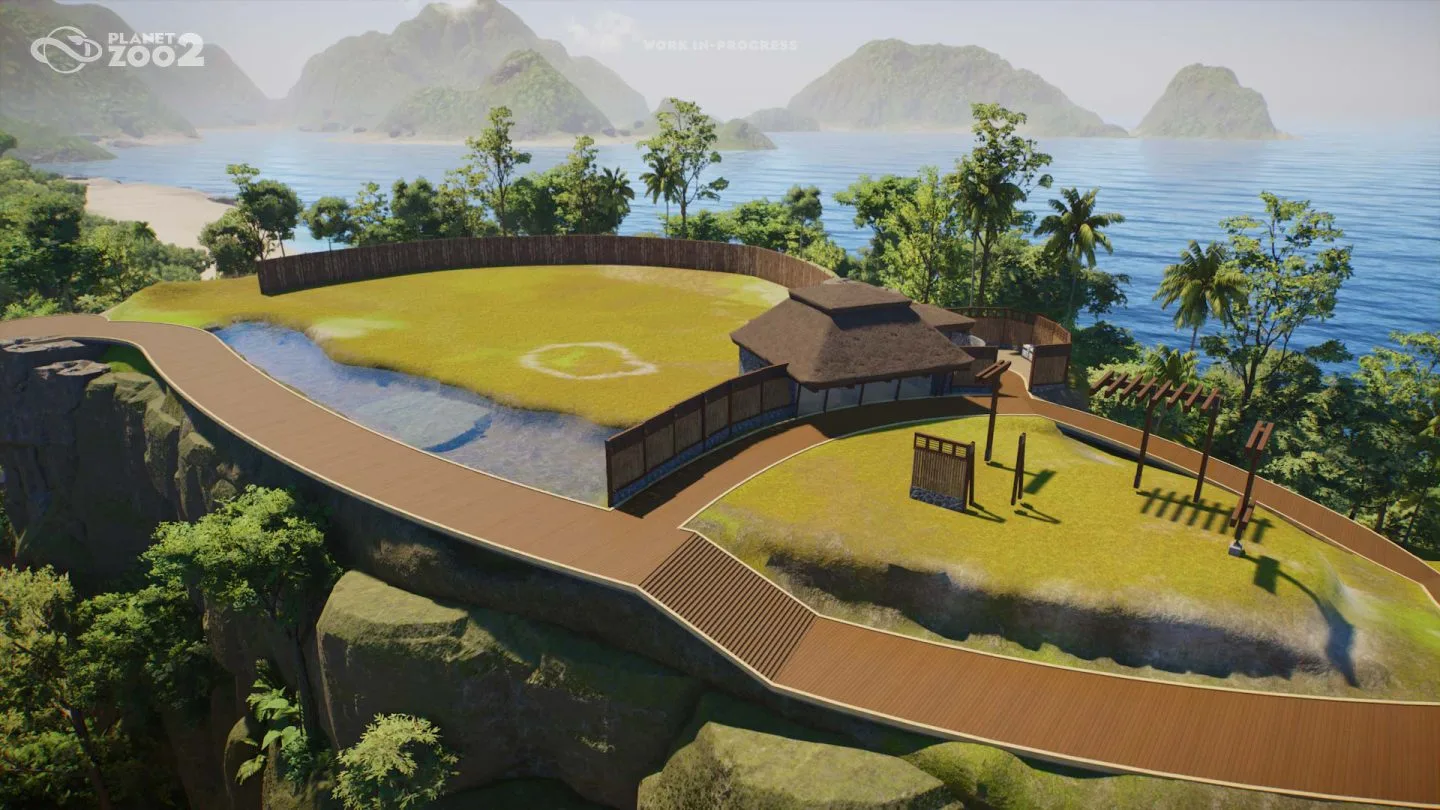
Every animal needs appropriate welfare conditions, including access to food and water, enough space, suitable terrain and plants, and a fulfilling social and enrichment environment. A network with many locations still has to provide these conditions for the animals housed at each one.
Start from the species requirements in the Zoopedia and the intended group. Determine which current location can meet them and what support the habitat needs. This is a planning sequence rather than an unverified list of interface steps.
Fully aquatic animals and flying birds broaden the types of habitat you can include. An aviary requires a roof and appropriate flying space; the Flyable Area reading and species requirements provide the relevant checks for birds. Different animal types therefore belong in the plan before you settle the architecture.
For a mixed habitat, confirm compatibility rather than grouping animals solely because they come from similar environments. Some birds can cohabit with other birds or terrestrial animals, but compatibility is selective. A shared enclosure still needs to satisfy each inhabitant.
Keep room to revise a habitat as the actual requirements become clear. A location surrounded by completed scenery and buildings may be less flexible when you need additional space. Design choices should preserve a practical way to respond to the game’s feedback.
Assign a purpose to each location
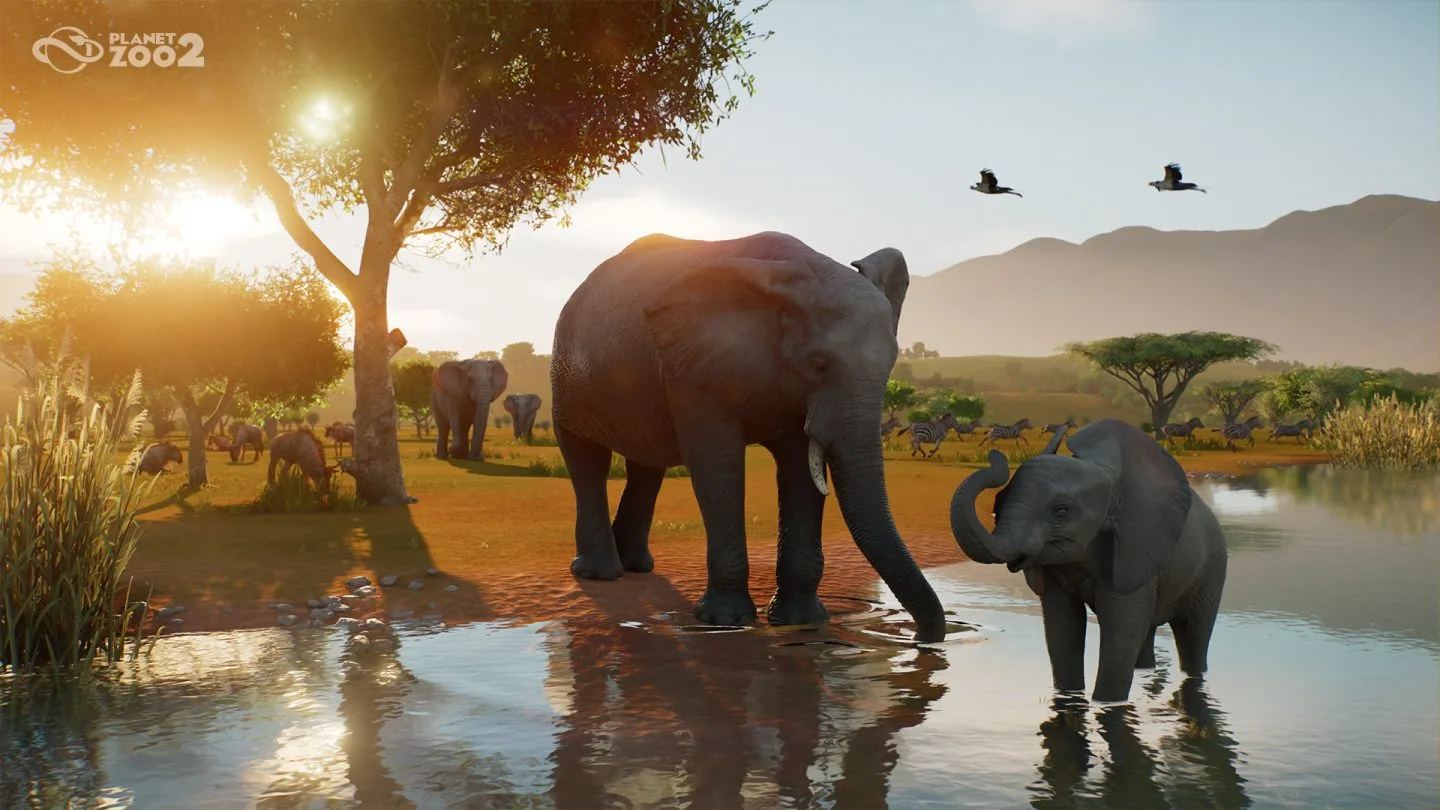
A zoo entertains and educates guests while caring for animals and supporting conservation. Wildlife Reserves extend the network beyond the zoo setting. Use these roles to decide what you want each location to contribute before growing the collection indiscriminately.
A proposed zoo role might be a focused visitor collection, a particular habitat style, or a care and research priority. Those are planning choices, not confirmed categories that the game assigns to your locations.
Keep the animal and visitor needs together. A species that fits the zoo's visual theme still needs a suitable habitat, while guests need worthwhile views and essential services. The collection should make sense within the experience you can deliver.
Do not assume that every animal can be released to any reserve immediately. Research can unlock the chance to release animals to the wild in a Wildlife Reserve. The specific animal and location conditions need to be checked in the game rather than inferred from the network's general purpose.
Use the Planet Hub to review the locations you actually operate. A clear plan for each site is more useful than opening many sites without understanding how their animal-care and financial commitments relate.
Use shared research deliberately
Research helps you understand species needs and can unlock new items, improved welfare options, and conservation opportunities. Vets conduct this work, while the Hub supports research management across your locations within the current mode.
Choose a research priority with an intended beneficiary. The selected species should have a current or planned habitat where the improvement can be used. This is a suggested organization method rather than a universal order of research levels.
Thriving requires investing in species research before providing the deeper natural and enriching environment. Thriving animals live longer and encourage more donations. This gives research a care and management purpose, but it does not establish an exact return for every species.
Review what the network already has available before deciding on another project. The confirmed shared progression direction is a reason to inspect the current research situation, not proof that all items are usable everywhere without additional conditions.
Avoid spreading attention across too many unrelated animal plans at once. A focused project makes it easier to connect the research choice, habitat change, and resulting animal condition. Once you have a verified method for a species, adapt it to the next one according to its actual requirements.
Budget for care across the network
Animal adoption, expansion, and hiring spend from the cash balance. Salaries and energy bills create ongoing expenses. A Franchise collection should therefore be planned around its complete care burden, not only the acquisition price.
Before adding another animal, identify the habitat, staff, facilities, and relevant utilities needed to support it. Depending on what you build, power and a network of filters and pumps may be part of the support arrangement.
A lower adoption price does not necessarily establish a lower total commitment. The provided material does not supply a verified ranking of food costs, staffing needs, or income by species. Inspect those details in the current game rather than using a generic cheap-animal label.
The visitor side also matters. Ticket prices can be adjusted, souvenirs sold, donations encouraged, and animal marketing campaigns purchased. A new animal should be considered alongside the experience it adds and the costs needed to present and care for it.
Loans provide immediate cash with interest. They may change what you can buy now without making the collection sustainable. If borrowing is part of a plan, identify the specific purpose and how the operation can support the obligation afterward.
Review the social group and family plan
Animals have species-specific social needs. Before acquiring more individuals, inspect the requirements for the group you intend to create. Do not assume that a visually appealing collection is automatically an appropriate social arrangement.
Breeding is another reason to plan beyond the first acquisition. Flying birds need suitable nesting sites, while the sequel also models nesting for other egg-laying animals with that requirement. The detailed reproductive conditions should come from the species information rather than a universal recipe.
Do not treat breeding as a guaranteed trading profit. Live prices, demand, reproductive timing, and mode-specific transfer rules are not verified here. A family plan should first provide suitable care and a way to review the changed population.
When animals mature or the group changes, revisit the habitat and social conditions. An enclosure suitable for the original inhabitants is not automatically suitable for every later population. Use current animal information rather than judging age or requirements solely from appearance.
Storage and trading are network systems managed through the Hub, but their exact limits and procedures need to be inspected in the released game. Do not assume storage removes every management obligation or provides unlimited capacity.
Keep care support clear at every zoo
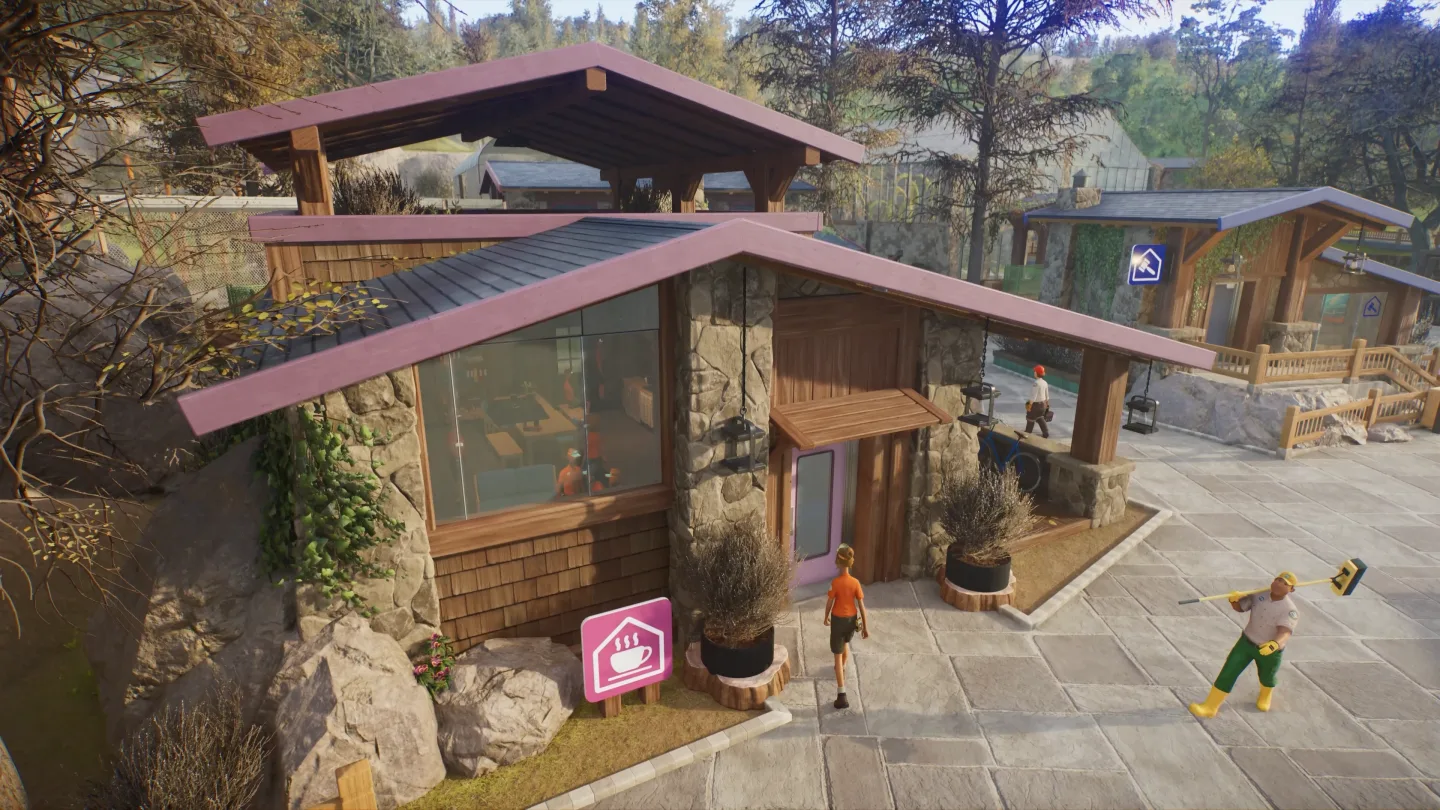
Keepers care for animals, vets treat illness and research, mechanics maintain habitats and facilities, caretakers keep the zoo clean, vendors serve guests, and educators support learning. A broader network still needs an understandable local operation.
Work Zones can divide a zoo into manageable areas. Use them to organize the current collection and support, then review actual workload and staff satisfaction. No universal staff-per-animal ratio is established in the supplied material.
Pay, training, and manageable workloads help staff satisfaction, while unhappy employees can quit. A collection plan that ignores support can create problems even when every habitat looks complete.
Staff facilities can be visible to guests in the sequel, who may enjoy watching the care work. This gives you a chance to integrate support into the visitor experience instead of treating every staff building as something to conceal.
Evaluate one addition before making the next
After acquiring and housing an animal, review the actual result at the location. Check welfare, the social arrangement, visitor viewing, relevant services, and the financial commitments. This is a suggested verification loop rather than a claimed mandatory game checklist.
If the animal needs another correction, resolve that before expanding the same plan to more locations. A network-wide copy of an unresolved design makes it harder to identify the original problem.
Record the conditions that made the addition successful: which species, which habitat, what support, and what the animal information showed. Transfer the method carefully, adapting to the next animal rather than copying every dimension and object.
The practical endpoint is a network whose animals have suitable homes and a clear conservation or visitor role, supported by research and an operation you can sustain. Exact market availability and acquisition rules must come from the current Franchise save. The confirmed global systems support the plan; they should not be stretched into a fabricated launch economy.