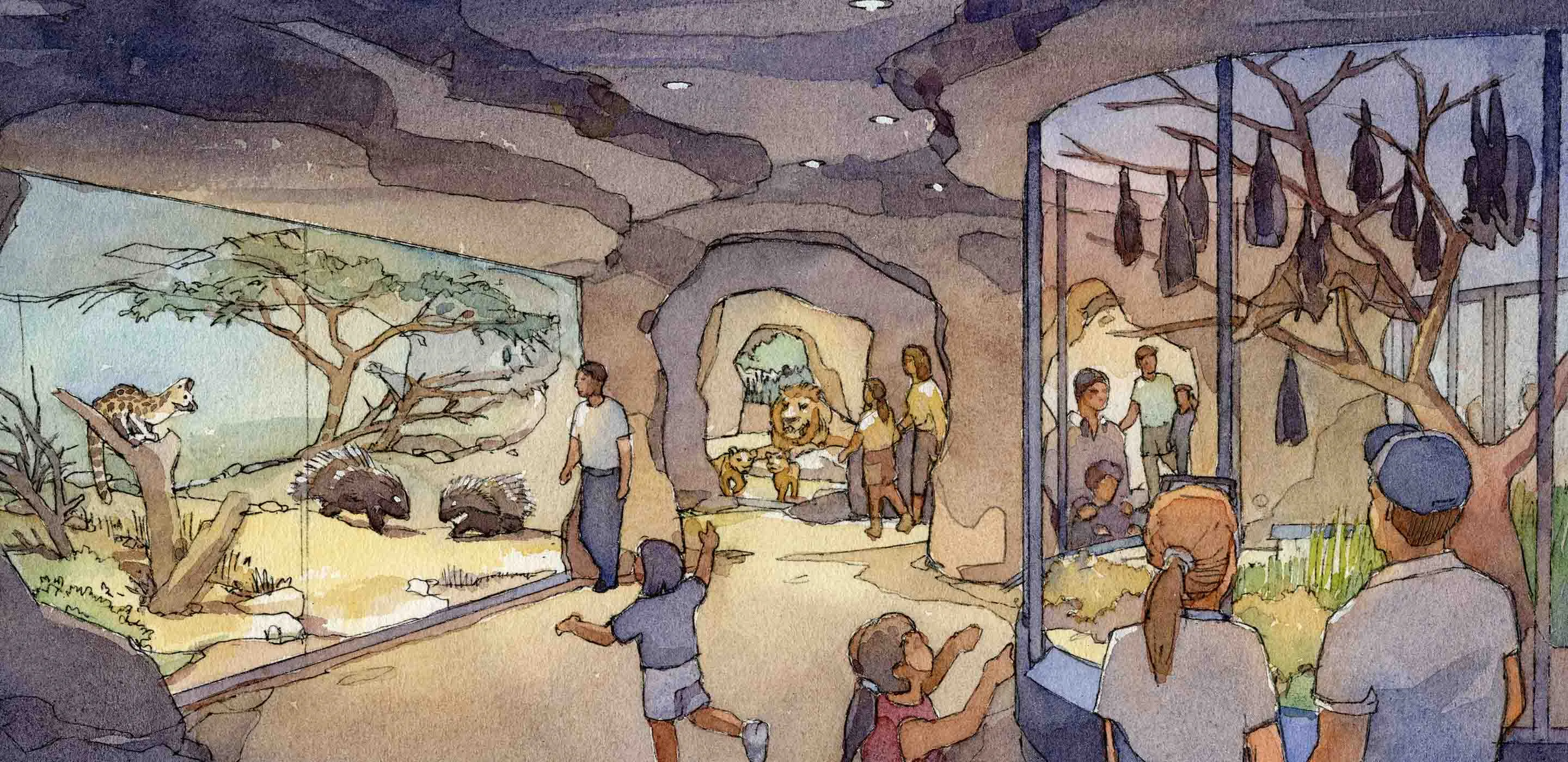
There is no verified species-by-species Planet Zoo 2 unlock animals table in this guide, updated on 12 October 2026, one day before launch. The confirmed systems include Career, Sandbox and Franchise, animal trading and storage through the Planet Hub, and species research that unlocks items, welfare options and opportunities for Wildlife Reserve release. Those statements do not establish a universal order for unlocking every animal.
If an animal is unavailable after you begin playing, separate three questions: whether the species belongs to your available game content, whether your current mode or location can obtain it, and whether you are trying to use a research-dependent feature. These are different problems and should not be treated as one locked-animal condition.
Use the inspection sequence below to identify which question actually applies. It avoids importing the original game's unlock rules or inventing a progression path before the release build can be checked.
Define what you mean by unlocking an animal
Players use unlock to describe several outcomes. You may want to acquire a species for a zoo, find it in a catalogue, access an item associated with it, complete a scenario goal or release it into a Wildlife Reserve. An answer about one outcome does not automatically solve the others.
Start with a precise end state. For example, write that you want a particular species housed in your current zoo. That is more actionable than saying you want it unlocked. If you already own an animal and want to improve its environment, the blocker may concern research rather than animal availability.
| Intended outcome | First thing to establish | Incorrect shortcut to avoid |
|---|---|---|
| Obtain a species | Availability in your current content and mode | Assuming every absence means a research lock |
| Place an acquired animal | A suitable destination and habitat | Assuming acquisition makes any enclosure valid |
| Improve welfare options | Relevant species research | Confusing an item unlock with a species unlock |
| Reach Thriving | Research and a natural, enriching environment | Assuming a purchased animal immediately thrives |
| Release to a reserve | Research and release-group requirements | Treating release eligibility as ordinary ownership |
This table organises your investigation. It does not describe confirmed menu tabs or claim that every possible restriction exists in the released game.
Check your mode before following a progression tip
Career, Sandbox and Franchise are confirmed modes. Career follows a globetrotting adventure involving zoos and Wildlife Reserves. Sandbox is presented around creative freedom. Franchise builds a global network with shared progression and research.
These broad descriptions matter because instructions must match where you are playing. A rule or objective seen in a Career situation should not be assumed to apply to Sandbox. Similarly, a Franchise progression observation does not establish what a fresh save in another mode can access.
Record your mode, the zoo or reserve involved and the exact outcome you want. When reading an in-game message or comparing your experience with another player, retain that context. It can explain why an apparently identical species behaves differently in two situations.
This prerelease guide does not claim an unrestricted animal roster in every Sandbox configuration, a complete Career unlock sequence or a shared unlock state between modes. Verify the actual options and restrictions in your current game rather than filling those gaps from familiarity with Planet Zoo.
Establish species identity before diagnosing availability
Identify the exact species you want, especially when several animals have similar common names. A search for a broad animal group may produce a different species, a community wishlist or a guide for the original game. Those results cannot prove that your chosen animal is available in Planet Zoo 2.
The sequel confirms new fully aquatic animals and flying animals alongside familiar favourites. This expands the types of homes you may need to prepare. It does not imply that every real-world aquatic species or every bird appears in the game.
Use the species information available in your own copy and distinguish the animal's identity from a habitat category. A bird is not automatically interchangeable with another bird, and a fully aquatic species cannot be planned around an ordinary land habitat simply because both belong to your zoo collection.
When an entry is missing, do not rename a similar animal in your notes to make the list look complete. Mark the exact species as unconfirmed or unavailable in that context until you can establish the reason.
Check the entry's content pack marker
The public Zoopedia includes a Content Pack filter. Its Golden Lion Tamarin entry carries a Deluxe marker, so appearance in the public roster is not proof of inclusion in every edition. Check the exact entry and your content access before treating an absent animal as a research or scenario lock.
The pack marker answers an inclusion question. It does not establish an adoption price, immediate market availability or an unlock sequence in your current mode.
Use the Planet Hub for network context
The Planet Hub brings together locations and provides access to trading, storage and research across your current game mode. It can be opened while playing, helping you move between your zoos and Wildlife Reserves without returning to the main menu.
For an availability problem, its main value is context. Check whether you are thinking about an animal already held somewhere in your current network, a new acquisition or a species-dependent research outcome. Keep those possibilities separate before deciding that the game has locked the animal itself.
Do not assume that the Hub guarantees an animal is present in trading or that storage overrides all placement requirements. Its confirmed role is to manage those parts of the network, not to provide every species on demand.
A useful personal record includes the species, current location if already owned, desired destination and next action. This can prevent you from attempting another acquisition when the task is actually to prepare a home for an animal already in your care.
Prepare the correct home before pursuing acquisition
Even after availability is resolved, the animal needs a suitable environment. Planet Zoo 2 welfare covers access to food and water, enough space, appropriate terrain and plants, and social and enrichment needs. The needs are species-specific.
For a prospective acquisition, work from the animal's requirements toward a habitat plan. Avoid constructing a decorative enclosure first and selecting an animal only because its appearance matches the theme. That approach can leave the animal technically obtained but poorly supported.
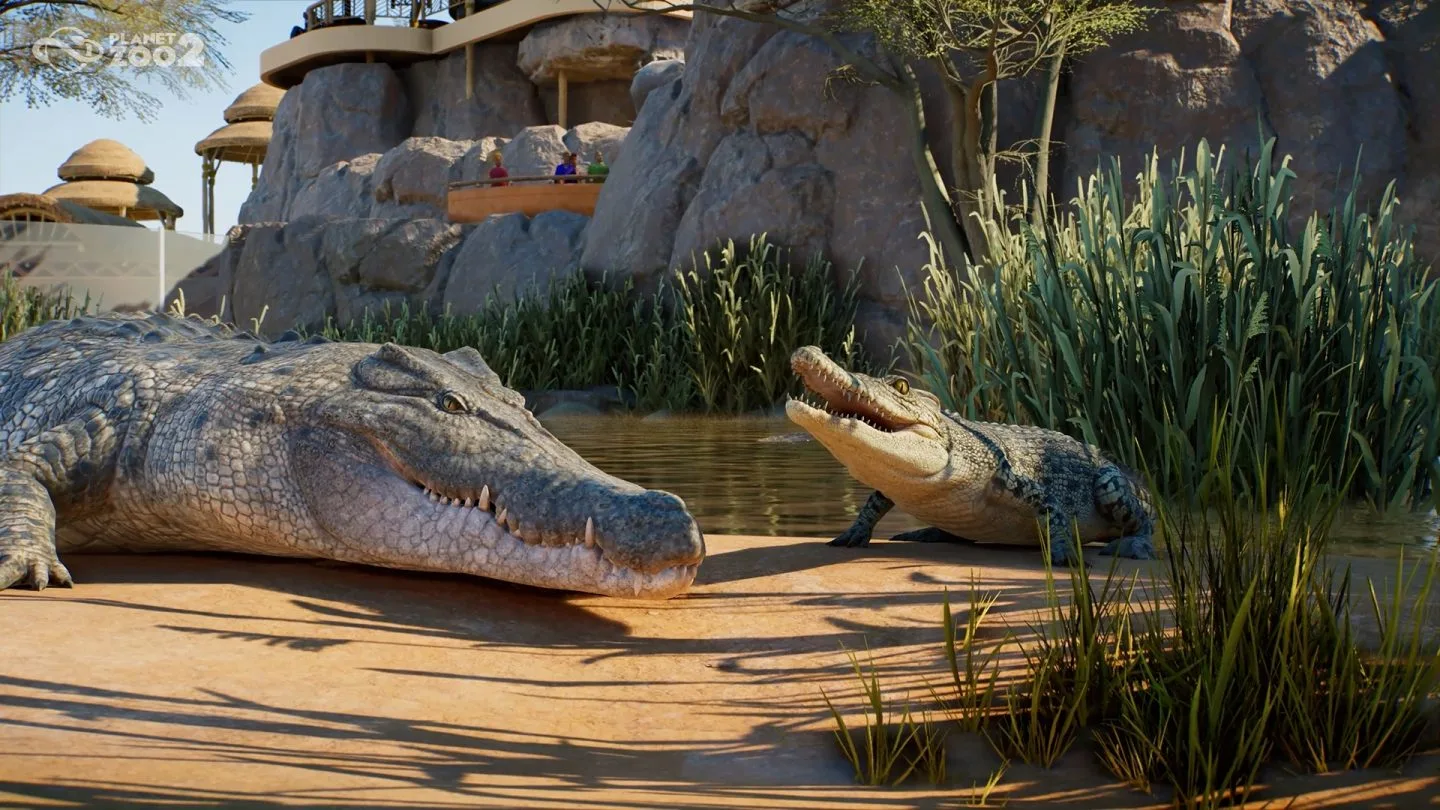
The crocodile scene illustrates why acquisition and accommodation are separate tasks. Land, water, planting and shelter belong to the physical home. Use the image to think about the components you will need to inspect; it is not an unlock screen or evidence of a particular species progression requirement.
Fully aquatic animals bring aquarium construction, filtration and keeper-access considerations. Flying animals use custom aviaries with barriers, support poles and dynamic mesh covers. Plan for the relevant animal type rather than assuming a generic habitat will work.
Understand what species research is confirmed to unlock
Research is confirmed to provide new items, improved welfare options and the chance to release animals into Wildlife Reserves. Vets conduct research, and the Planet Hub helps manage it across locations within the current mode.
Those outcomes are useful, but they do not establish that research purchases or reveals every species. If your problem concerns a missing animal, first check whether the game explicitly associates that animal's availability with research. Do not infer the connection from an item being locked nearby.
For a welfare goal, research has a clearer role. Thriving sits beyond basic welfare, and understanding the species through research is a prerequisite. That makes research relevant to what you can do for an animal already under your care.
For a conservation goal, research can enable release opportunities. Wildlife Reserves also unlock higher levels of species research through insights into natural behaviour. Think of this as progression in care and conservation, while keeping the exact level names and requirements open until the game displays them.
Separate release eligibility from owning the species
You can own an animal without having established that it qualifies for a particular reserve release group. Planet Zoo 2 uses species-dependent groupings that can include solitary animals, breeding pairs or larger groups.
Release requirements may involve longevity, fertility or genetic diversity. The confirmed information does not provide numerical thresholds for every species or guarantee that all these checks apply identically to every group.
If your chosen animal cannot be released, identify whether the blocker concerns research, the selected grouping, the animal's attributes or the destination ecosystem. A failed release attempt does not necessarily mean the species itself is unavailable for zoo ownership.
Keep the two milestones in your plan. First acquire and care for the animal appropriately. Then pursue the research and release conditions relevant to your conservation goal. Doing so avoids describing ordinary ownership as incomplete simply because a later feature is not yet ready.
Investigate an unavailable animal without guessing
Once you have the released game, use this order of checks:
- Identify the exact species and the specific outcome you want.
- Confirm your current mode and location.
- Check whether the species is part of the content available to your copy.
- Read any actual availability or restriction message shown in the game.
- Distinguish a missing acquisition opportunity from an animal already held in your network.
- Check relevant trading, storage or research information through the Planet Hub.
- Prepare an appropriate home if acquisition is possible but housing remains unfinished.
- Follow only the prerequisite the game actually identifies.
The order helps narrow the problem before you spend money or research time. It is a diagnostic method, not a substitute for the release interface or a claim about specific button names.
If there is no message explaining the restriction, record what you see. That is more useful than trying several unrelated changes and concluding that the last change must have unlocked the animal.
Avoid false shortcuts and old unlock lists
Do not rely on an unlock list merely because it contains the same franchise name. The original Planet Zoo's systems, content packs and community terminology can appear in search results for the sequel. A familiar species name does not make an old procedure applicable.
Likewise, treat a wishlist as a request for future content rather than proof that an animal is included or obtainable. Community collections and early previews can help you form questions, but exact availability needs to be checked against your game and its content.
There is no verified cheat sequence, universal fastest unlock route or guaranteed research order presented here. Adding one would make the guide more decisive-looking while obscuring the real uncertainty.
Your immediate next step should come from the identified blocker. If the animal is available but lacks a prepared home, build the home. If an associated option needs research, pursue that research. If species availability itself remains unconfirmed, resolve it before designing an expensive zoo section around that animal.
Keep a small availability record as your zoo grows
A compact record can prevent repeated investigation. For each target species, note the mode, whether you have confirmed its availability, where you intend to house it and what prerequisite remains. Add exact requirements only when they are visible and applicable.
Separate confirmed information from plans. Wanting a species for a future tropical section is a design intention; seeing a current acquisition option is an observation. Keeping both in separate fields makes the next action obvious.
Update the record when you change modes, locations or content. An earlier observation may remain useful without proving the same availability in every new context.