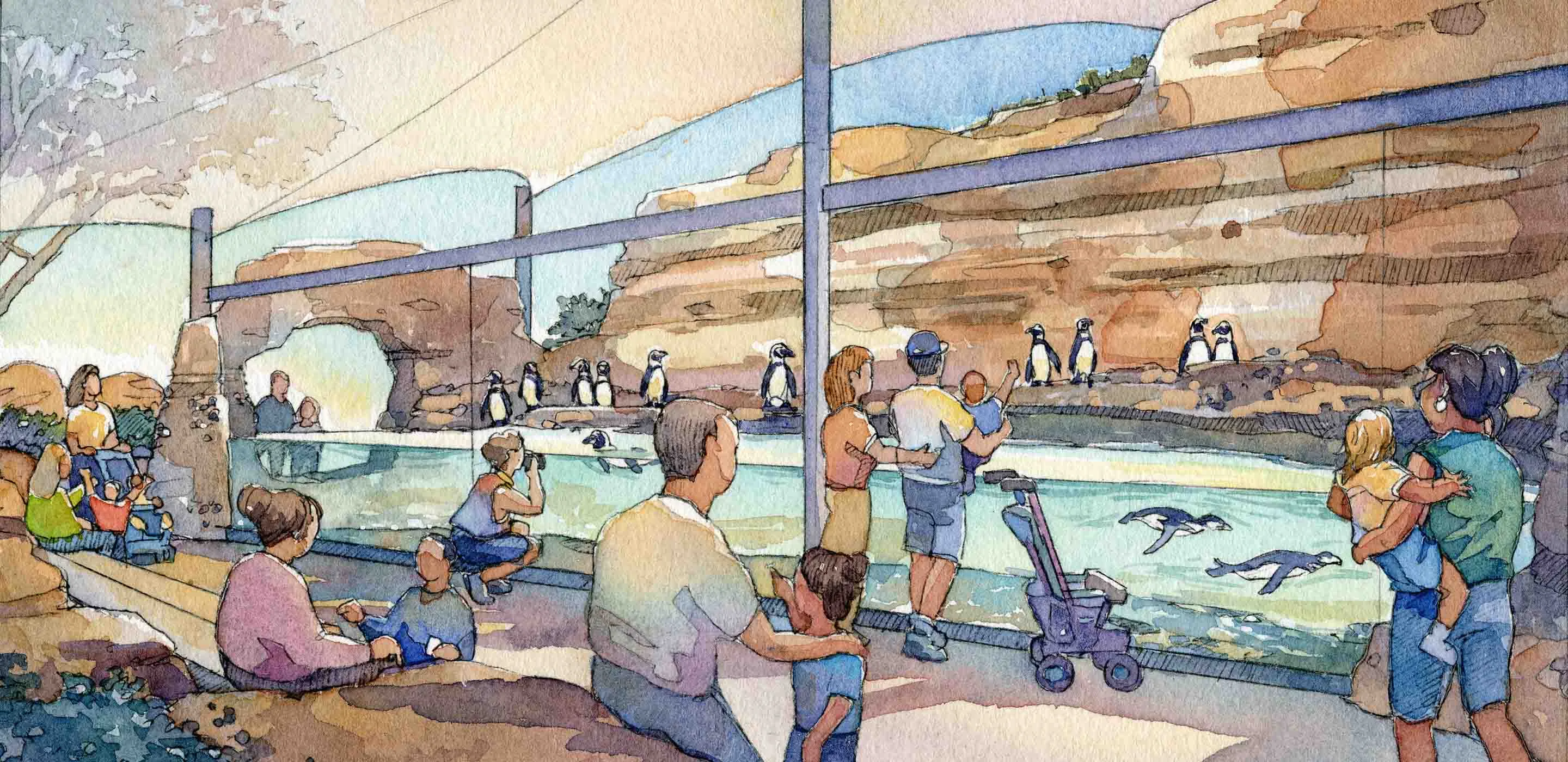
Planet Zoo 2 guest happiness starts with food, drink, toilets, and places to rest, then extends to good animal viewing, education, scenery, and the quality of animal care. Unhappy visitors may leave early or ask for a refund. As of 12 October 2026, the game is unreleased, so exact launch-build need thresholds, ideal service spacing, and interface steps remain unverified. Use the guest information available in your zoo to identify the weakest part of the visit before adding more attractions.
Do not begin with the assumption that every unhappy visitor needs another shop or a lower ticket price. A guest can have access to services and still be disappointed by the animal experience or welfare problems. Diagnose the visit as a sequence of places and experiences, then make a targeted change you can evaluate.
Start with the problem visitors are reporting
Planet Zoo 2 provides statistics and trends in what guests have been thinking. Use that information to distinguish a missing need from a broader experience issue. The aim is to identify what your current visitors are reacting to, rather than applying a generic list of purchases.
Select an area or attraction you want to improve and review the relevant guest feedback. A zoo-wide result is useful context, but the experience of visitors in a newly expanded area may differ from the experience near the entrance.
Describe the issue in concrete terms. The visitor may need food, drink, a toilet, rest, a better view, or a better overall animal experience. These lead to different responses. An overall happiness result alone should not be treated as proof that one particular service is absent.
Keep current evidence separate from predecessor advice. Older guides can show common player concerns, but they do not establish the sequel's exact penalties, distances, or settings. A diagnosis should follow the present zoo and the actual information it provides.
Check food, drink, toilets, and rest along the route
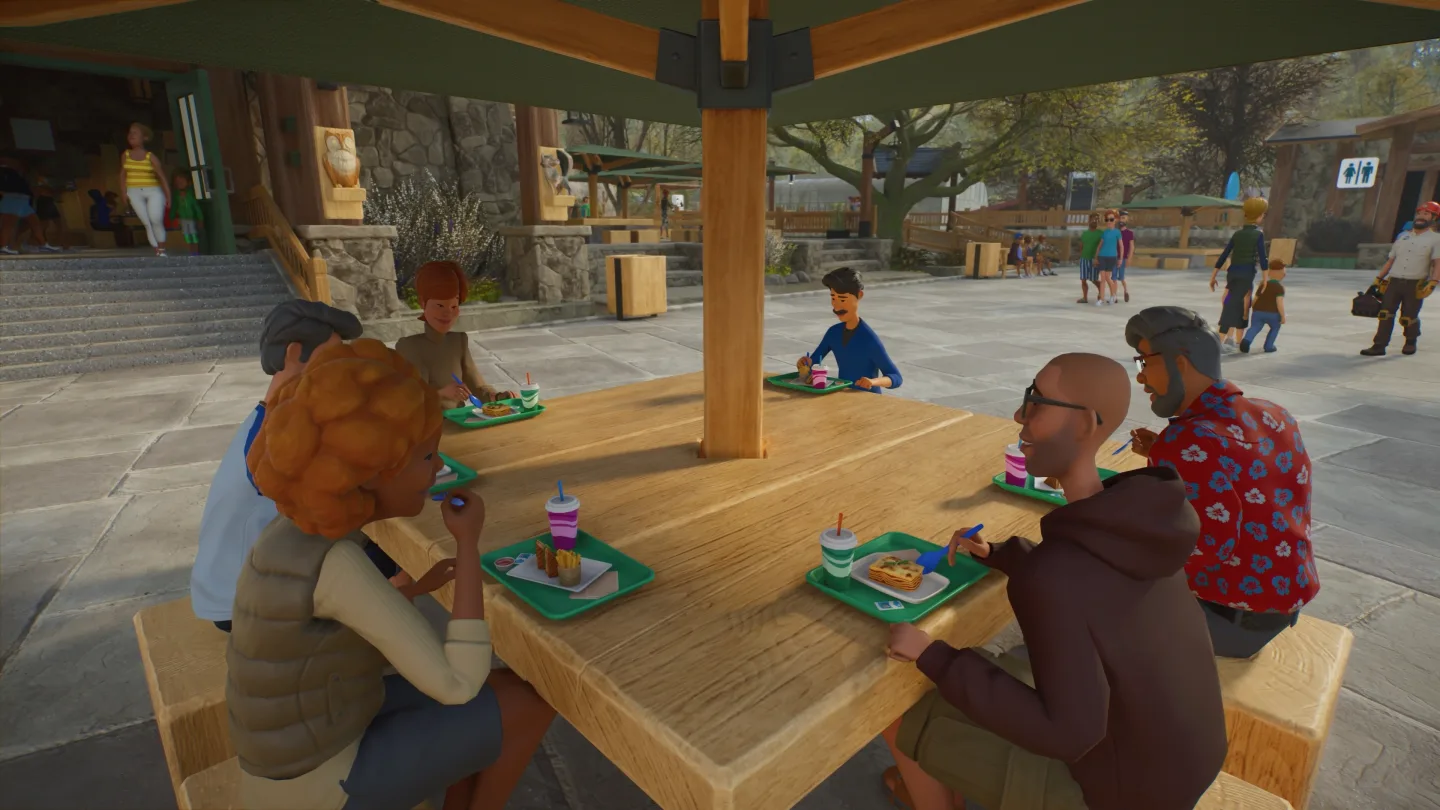
These four needs are confirmed parts of the visit. Review the guest route through the affected area and identify the services intended to meet them. Do not assume that a facility somewhere on the map establishes effective service for every part of the zoo.
A practical design review follows the route from an attraction toward the nearest visitor area. Ask where a guest can obtain food or drink, use a toilet, and rest. This is a planning inspection, not a verified maximum travel-distance rule.
Check the functional support as well as the building facade. Vendors serve visitors in shops and restaurants. A beautiful service area still needs the relevant operation behind it, while expanding services creates financial and staffing commitments.
Add facilities to answer a known need rather than duplicating everything automatically beside each habitat. A clear initial guest area can support a compact zoo, with additional areas considered as the route grows. The exact timing should come from the visitor experience you observe.
Rest opportunities should also fit the landscape and route. Place them where they support the intended visit rather than treating their presence as decoration alone. The supplied material does not establish an ideal bench count or a universal relationship between seat number and happiness.
Give visitors meaningful views of animals
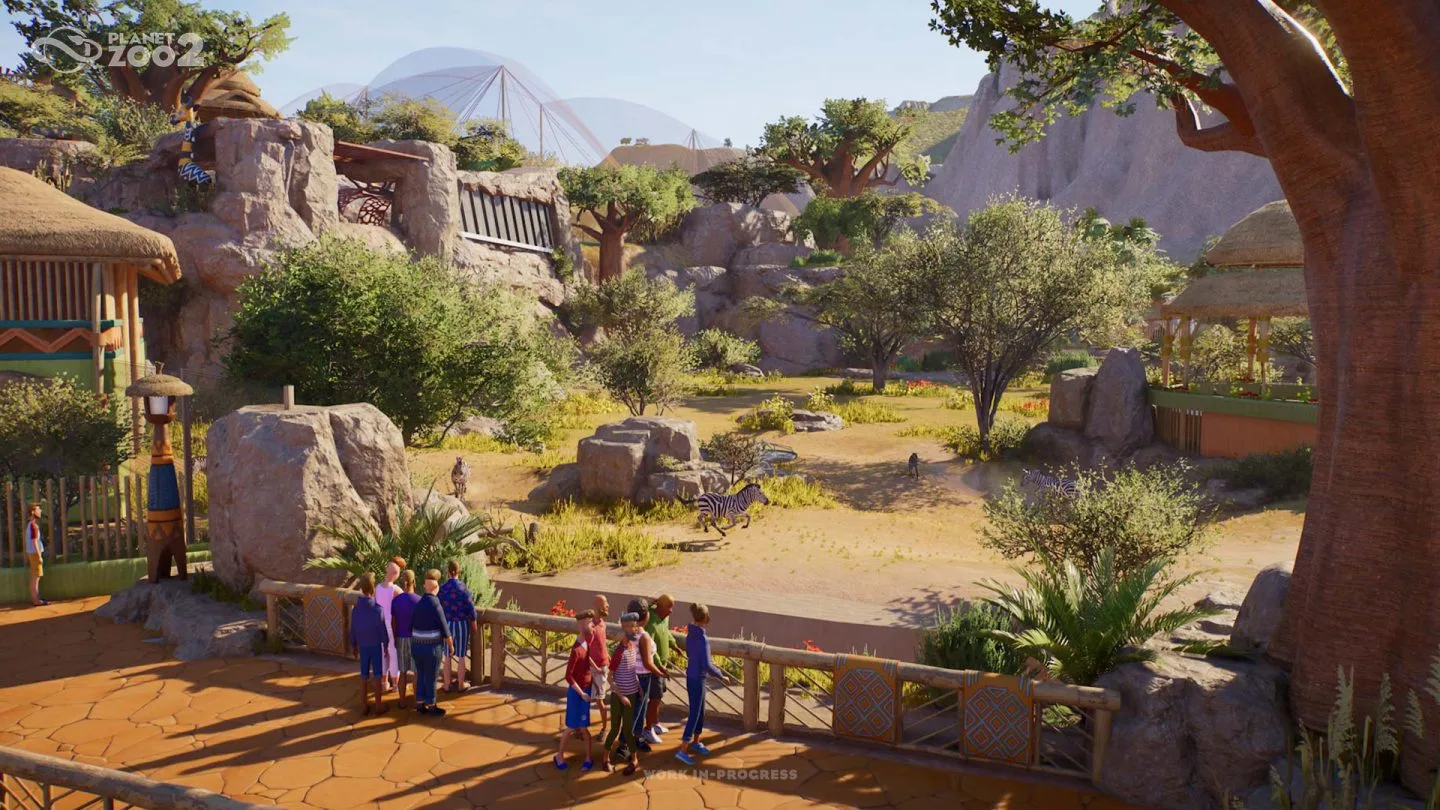
Guests want to see the animals they came to visit. A path that passes a habitat is not automatically a useful viewpoint. Review the view from guest height and consider where the animals are likely to occupy the environment.
Choose a few clear observation areas. A view toward open habitat space, a perch zone, or an aquarium window gives the route a purpose. This is a design method rather than a claim that every species needs a particular viewing distance or window size.
Flying birds highlight the importance of elevation. Birds may perch or fly overhead, so elevated walkways can provide appropriate views inside or outside an aviary. A ground-level path that shows mostly vegetation may need a different viewing arrangement.
Do not assume every bird permits a walkthrough. Some species are comfortable with visitors inside their aviary, while others are shy and need suitable space and conditions. Check the Zoopedia before adding a guest gate and an internal path.
The goal is a worthwhile view that works for the inhabitants. Guests wanting to see an animal does not remove the animal's need for privacy or retreat. Plan both sides of that relationship rather than maximizing exposure everywhere.
Keep animal welfare part of the visitor experience
Guests dislike seeing animals with welfare issues. If welfare falls low enough, protesters may arrive near habitats and make other visitors aware of the poor care. Those visitors may become upset enough to leave.
This means an animal-care problem can also become a guest-happiness problem. Inspect the animals' actual needs before assuming the visitor route or admission price is solely responsible for the feedback.
Animals need food and water, sufficient space, suitable terrain and plants, and appropriate social and enrichment environments. Identify the unmet condition and correct it directly. Adding another visitor facility does not necessarily address poor animal welfare.
Good viewing and welfare must remain balanced. Animals need opportunities to hide away from guest view and avoid stress. A close viewing route can be visually exciting while creating an environment you need to reconsider for the species.
Thriving is a higher care state beyond ordinary welfare, requiring species research and a natural, enriching environment. It encourages more donations and contributes to Animal Husbandry in Zoo Reputation. Those benefits are confirmed, but they should not be turned into an unsupported universal happiness percentage.
Make education fit the animal experience
Guests want to learn about the animals as well as see them. Educators can give Animal Talks, and education items include speakers, boards, and webcams. Tours are also available as part of the education options.
Choose education that matches the attraction and viewing route. A coherent arrangement connects information with the animals being observed rather than scattering unrelated educational objects wherever space remains.
Guest Education is one of the four components of Zoo Reputation. The overall reputation also considers Animal Husbandry, Sustainability, and Guest Experience. This distinguishes education from happiness while showing how both belong to the larger operation.
Do not attach an invented happiness multiplier to a talk, board, or tour. The provided information confirms their educational purpose, but not a universal numerical effect. Use the actual guest information to judge the experience in your zoo.
If you are diagnosing a specific complaint, make education a targeted improvement rather than the default answer to every low happiness result. A visitor lacking a basic service needs that issue addressed, even if the nearby habitat already has excellent educational presentation.
Use scenery to support a coherent visit
Guests and staff like spending time in a scenic zoo, and scenery can improve their happiness. Use that as a reason to create pleasant, intentional areas, not as a guarantee that placing a fixed number of objects produces a particular result.
Start with the main layout: paths, service areas, habitat viewpoints, and visible support buildings. Add planting, materials, and small decorative details after those functional relationships make sense.
The sequel supports scalable scenery and natural scenery, improved terrain tools, and a nature brush. These tools can help build large environments and refine small areas. Their availability does not mean every dense planting arrangement improves the visitor experience equally.
Review scenery from guest height. A tree that looks attractive from overhead can obscure the intended animal view, while a well-framed path can make a simple area feel deliberate. The visual composition should reinforce the reason visitors are in that place.
Keep the style coherent within an area. You can use the confirmed themes to create different regions of the zoo while maintaining clear transitions. A stronger visual identity is a design goal, not evidence of a guaranteed happiness score.
Update the old assumption about staff facilities
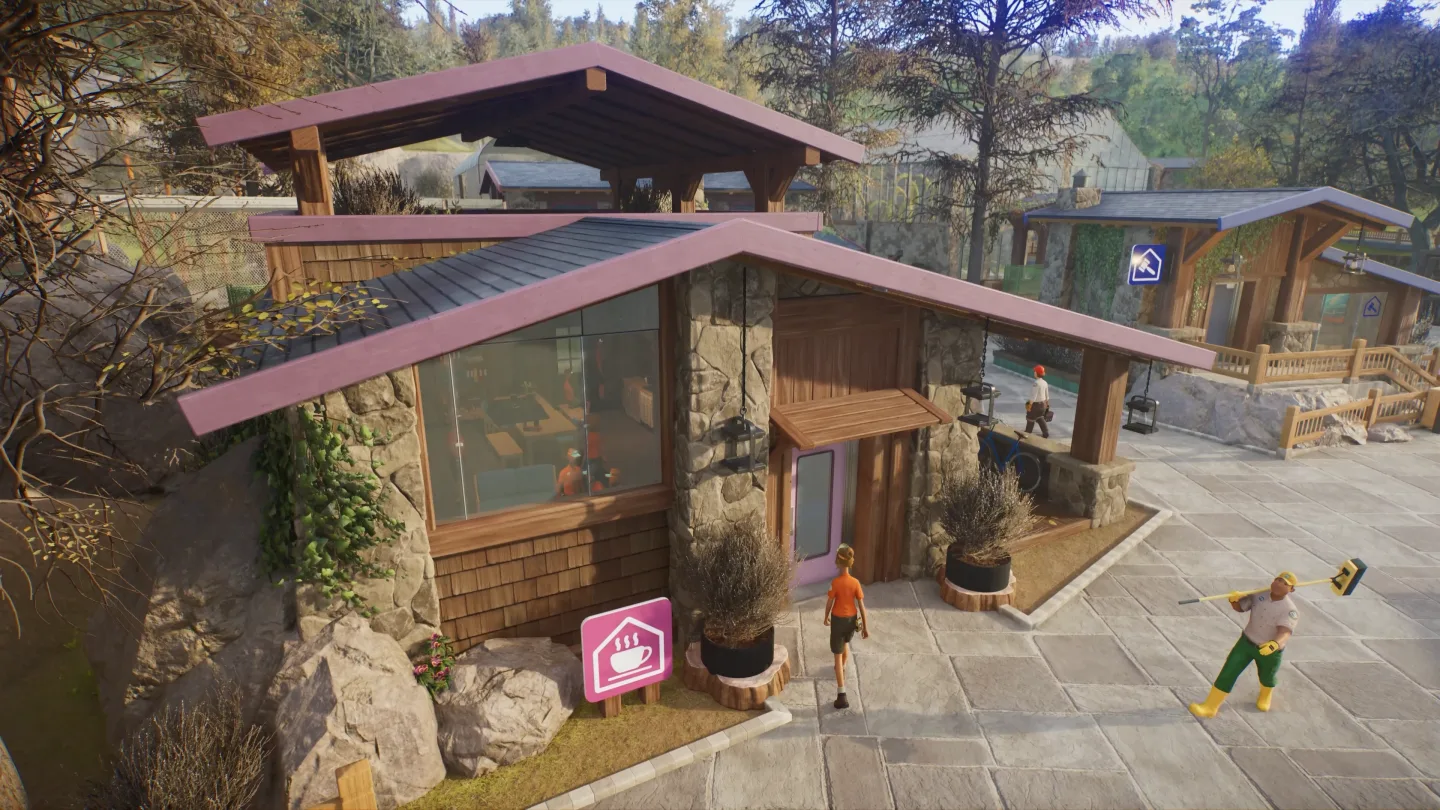
Planet Zoo 2 does not require you to hide staff facilities away from guests. Visitors can enjoy seeing vets and keepers caring for animals. This is a meaningful change to an assumption found in predecessor planning advice.
A visible staff area can therefore belong in the public-facing story of the zoo. Use consistent materials, planting, and scenic details to integrate it with the surrounding route. You can give guests a view of care work while keeping the support arrangement functional.
Do not remove or relocate every visible staff facility solely because an older guide associated those buildings with unhappy guests. Check current guest reactions and the sequel's actual behavior before making a broad redesign.
The facilities still need to support their roles. Keepers care for animals, vets treat illness and research, and mechanics maintain habitats and facilities. Their work contributes to the animal experience that visitors see.
Staff happiness also matters operationally. Appropriate pay, training, and manageable workloads help retain employees, while dissatisfied staff can quit. A guest-focused redesign should still leave the zoo with a support network that can function.
Review pricing with the whole experience
Ticket prices can be adjusted in Planet Zoo 2. Guests who are unhappy may ask for refunds or leave early. That makes admission part of a management review, but it does not establish a universal ideal ticket price.
Consider what the current zoo actually offers before changing admission. Animal diversity, viewing, services, scenery, and education shape the visit. A price copied from another zoo may not fit yours.
If you adjust prices, limit other major changes during the comparison when possible. Adding animals, launching marketing, and rebuilding visitor areas together makes it harder to understand the resulting guest reactions.
Use the actual financial and guest information in your save. A higher cash balance alone is not proof that happiness improved, while a better visitor experience does not automatically identify the most profitable price. Evaluate the outcome relevant to the decision you made.
Check the new area after expansion
New habitats create a new visitor journey. Review how guests approach the animals, what they can see, and where essential services fit. Do not assume the original entrance area serves every later zone equally well.
The rough layout can include additional small guest areas as the zoo grows. This is a proposed design response, not a requirement to build a full service cluster for each species. Place new services when the experience demonstrates a need.
Review welfare in the new habitat at the same time. An expansion that introduces care problems can affect visitors even if the public paths and shops look complete. The guest experience and animal support should be planned together.
Check scenery after the functional arrangement is clear. A new area can adopt a distinct theme while still maintaining an understandable route to the rest of the zoo. Decorative variety works best when visitors can follow the intended journey.
Evaluate one change before adding another
Choose the most clearly identified weakness, make a focused improvement, and return to the same guest information. This creates a meaningful comparison rather than a growing list of unassessed construction projects.
If the feedback does not improve, check whether the change addressed the actual issue. A new shop does not necessarily solve poor animal viewing. More scenery does not replace toilets. A pricing change does not fix an animal welfare problem.
Consider several aspects of the visit when interpreting the result, while keeping them distinct. Guest happiness, education, animal welfare, donation behavior, and financial performance are related but are not interchangeable measurements.
The useful endpoint is a visit that provides essential services, appropriate views, learning opportunities, a scenic environment, and responsible animal care. Confirm improvements through current guest information and observation of the area you changed. Exact thresholds and optimized arrangements should come from the released game rather than a predecessor formula.