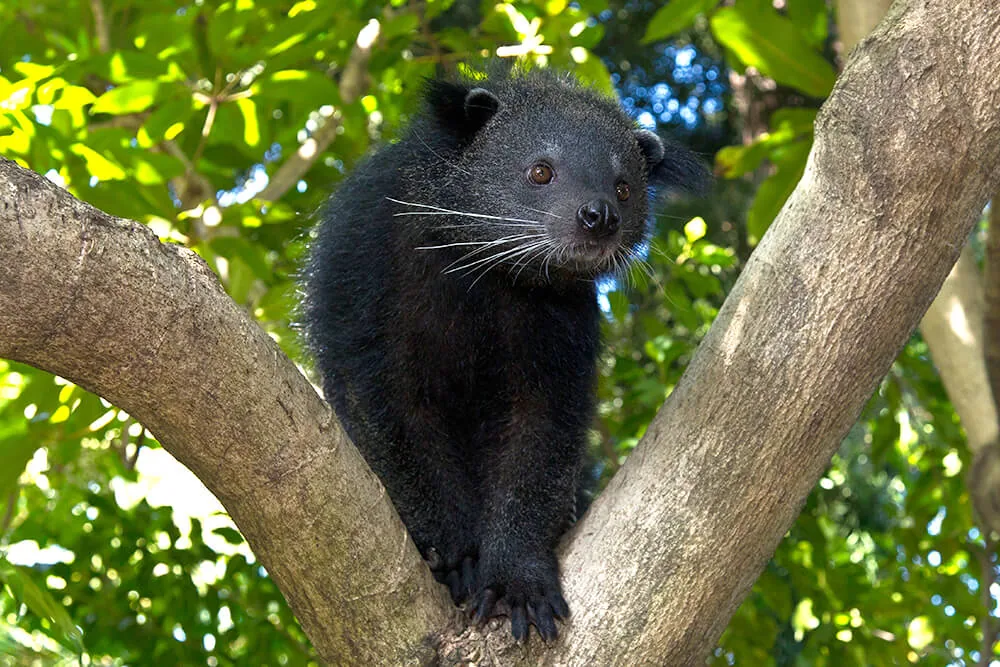
The binturong is confirmed for Planet Zoo 2. It is a forest-dwelling mammal known for a shaggy coat and a grasping tail, making a climbing-focused forest display a sensible design idea. Its exact simulated habitat size, climbing requirement, temperature range, food setup and group limits are not verified in this guide.
This is an October 12, 2026 pre-release planning guide. Use its identification details to choose the right animal and its design advice to sketch a practical exhibit. Final care settings must come from the Planet Zoo 2 species information. A real binturong's habitat or diet can inform an educational theme without supplying the game's numerical requirements.
Identify the animal before you build
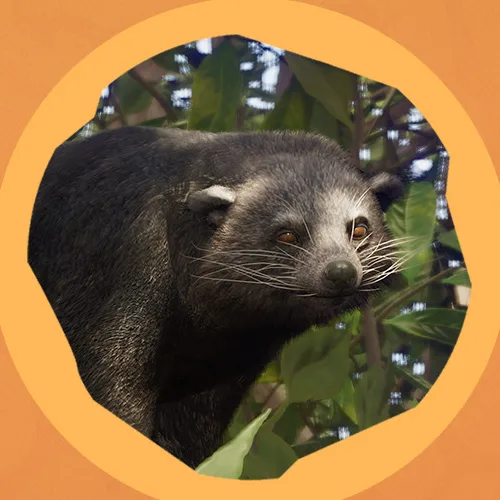
The binturong's scientific name is Arctictis binturong. Its common nickname is bearcat, but it is neither a bear nor a cat. It belongs to the civet family, Viverridae. That distinction matters when you are searching for the species or choosing an educational description: do not build an article or exhibit label around a misleading nickname alone.
The real animal has a broad body, shaggy dark fur and conspicuous whiskers. Its long tail can grasp branches, and its feet support a flat-footed walking style. In an image, look for the combination of a heavy-looking body and a long tail rather than relying only on a dark coat.
These features help distinguish the binturong from other forest mammals. They do not assign it a game's climbing rating, barrier strength or social behavior. Confirm that you selected the Binturong entry before investing in an elaborate forest enclosure or attempting to follow another species' requirements.
Build the theme around the canopy
Real binturongs live in forests across South and Southeast Asia and spend much of their time in trees. A canopy-focused exhibit is therefore a reasonable creative starting point. Think about how a visitor will recognize the animal when it is above ground, not just how the habitat looks from an overhead construction view.
As a planning suggestion, organize the scene into a visible climbing area, a quieter wooded area and a route you can inspect without moving the camera through dense foliage. These are design roles, not verified Planet Zoo 2 welfare categories. The game's actual entry must determine which objects, vegetation or environmental conditions satisfy the animal.
A forest theme does not require filling every visible gap with scenery. Leave enough visual separation that branches, resting positions and the animal's silhouette remain distinguishable. You can make an enclosure look wooded while still providing a useful side view of the binturong's body and tail.
Understand how the tail informs the design
The real binturong's prehensile tail helps it grip and balance while climbing. It is a useful part of the animal's identity, but it is not a license to assume that any narrow support in the game will be usable. Planet Zoo 2's interaction system lets animals use accessible objects, and accessibility remains the important qualification.
For your initial design, think in terms of a connected route rather than several isolated pieces. A branch placed high in the habitat may look appropriate while being difficult to understand as part of a continuous path. Keep the first climbing arrangement easy to inspect, then increase its complexity after checking what the animal can actually use.
Do not transfer a real-world statement about the tail into a simulation shortcut. For example, the tail's role in balance does not prove that an animal can bridge a particular gap or hang from a specific decoration. Let observation and the game's own information resolve those details.
Separate a natural diet from feeding settings
Binturongs have teeth and claws associated with carnivores, yet real animals eat a substantial amount of fruit. Their broader diet can include other plant material and small animals. This is useful context for understanding the species, especially if the bearcat nickname led you to expect a bear-like feeding pattern.
It does not establish the game's feeder, food quality setting, meal size or ongoing food cost. Read the Binturong entry and supported feeding options before placing food facilities. Do not substitute a diet from another forest mammal or reproduce the ingredient list used by a real zoo as if it were a recipe in the simulation.
For a creative display, you might choose a fruit-forest interpretation and use educational details to explain the animal's role in forest ecosystems. Keep the functional feeding setup separate from that scenery concept. An object resembling fruit or a decorative food basket is not evidence that the animal can feed from it.
Make room for an inspectable first build
No verified minimum area or climbing quantity is supplied here. That prevents an honest dimensioned habitat recipe, but it does not prevent a useful site plan. Choose an area where you can place the enclosure, a staff connection and a viewing edge without trapping every side behind buildings.
Keep at least one direction available for a possible redesign. That is a convenience recommendation, not a guaranteed welfare improvement. Its purpose is to let you react to the species values you encounter in the game. A heavily decorated entrance can be difficult to move even when a simple habitat expansion would otherwise be straightforward.
Begin with a readable boundary and an uncluttered interior. Add the functional pieces required by the game's actual information before finishing the forest scene. This makes it easier to distinguish an unmet requirement from an aesthetic decision and reduces the temptation to solve every problem by adding more trees.
Plan views for a tree-dwelling animal
A ground-level window may give visitors a clear view of the floor while offering little view of an animal perched in branches. Consider the intended observation angles as part of the initial design. The goal is to see the binturong's body and tail in its forest setting, not just create a photogenic wall of vegetation.
As a design exercise, imagine the animal at several positions along your proposed climbing route. Look from the guest side and from a service inspection angle. If every position disappears behind foliage, simplify the foreground before decorating the background further.
An elevated viewing idea may suit the theme, but no height, guest bonus or binturong-specific requirement is confirmed here. Treat raised views as a creative option to evaluate within the actual building tools. Keep the viewing route distinct from the staff connection so a decorative balcony does not become your only planned route through the surrounding area.
Use natural activity patterns carefully
Real binturongs are mostly nocturnal and often rest in high branches during the day. That information can explain a forest exhibit's educational story. It does not establish a tested daily schedule in Planet Zoo 2 or mean that a resting animal is unhappy.
The sequel's revised animal decision system considers factors such as time of day, season, weather and internal state. However, broad confirmation of that system does not reveal the exact behavior schedule of this species. Avoid interpreting one daytime observation as a fault in the enclosure or promising visitors a particular animation at a particular hour.
When evaluating your build, use the animal's reported needs alongside what you observe. A useful note identifies a specific access issue or a repeated pattern in a specific location. An unsupported statement such as 'the binturong always sleeps because the enclosure is too small' makes a causal claim that this guide cannot support.
Do not turn solitary biology into a group limit
Real binturongs are generally solitary, with mothers caring for offspring. That background helps explain why a picture of a large mixed group is not enough to establish a suitable simulated social arrangement. It still does not provide Planet Zoo 2's permitted numbers or male-to-female composition.
Before adoption, read the game's group information and plan for the animals you actually intend to keep. Do not make a numerical rule from the real animal's social description. Similarly, do not assume that two forest species are compatible simply because their geographical ranges overlap or their exhibits use the same scenery theme.
If you have no verified compatibility information, keep the initial design focused on the binturong. A single-species planning approach leaves fewer unresolved questions than a complicated mixed exhibit. It is a starting method, not a claim that the game forbids all combinations involving this animal.
Choose enrichment through actual support
Planet Zoo 2 supports more varied interactions with natural objects, including eating, rubbing and scratching where an object is accessible. The important step for a binturong exhibit is to determine which options the species can use. The appearance of an object alone does not answer that question.
As a planning recommendation, introduce functional objects in a simple arrangement before embedding them deeply into themed scenery. Keep access visible and observe whether the setup works as intended. Change one part of the arrangement at a time if you need to understand an access problem.
Do not promise a specific climbing animation, food interaction or resting pose from an illustration. An official species image establishes the animal's appearance, not an instruction to reproduce every object visible behind it. A background branch may be scenic context rather than a complete example of the simulated enrichment or climbing requirement.
Keep the species story accurate
The binturong is a useful animal for a forest conservation theme because its identity is closely associated with trees and fruit. Its scent is often compared with buttered popcorn, and its tail is an unusual adaptation among mammals. Those details can give an exhibit a recognizable story without turning it into a generic bear display.
Use those facts as educational context. There is no verified scent-based guest attraction mechanic here, no popcorn-related scenery bonus and no claim that a particular conservation decoration changes the animal's welfare. Describe the real animal and then let the game's supported systems determine your management decisions.
The official roster confirms the species, but release availability is not the same as adoption availability in every situation. Read the entry and the mode's actual conditions before committing to a finished exhibit. Avoid inventing a research unlock or a price merely to make the plan look more complete.
Finish the binturong plan in a useful order
First confirm the species entry. Next collect its actual environment, space, social and feeding values. Sketch the boundary and staff connection, then create a simple climbing arrangement you can inspect. Add the required functional objects before completing the forest backdrop.
After the animal is introduced, compare its reported needs with the setup and observe access from more than one angle. Revisit the foreground planting if the animal becomes hard to see. Add decorative complexity only when you can still explain how the enclosure works.