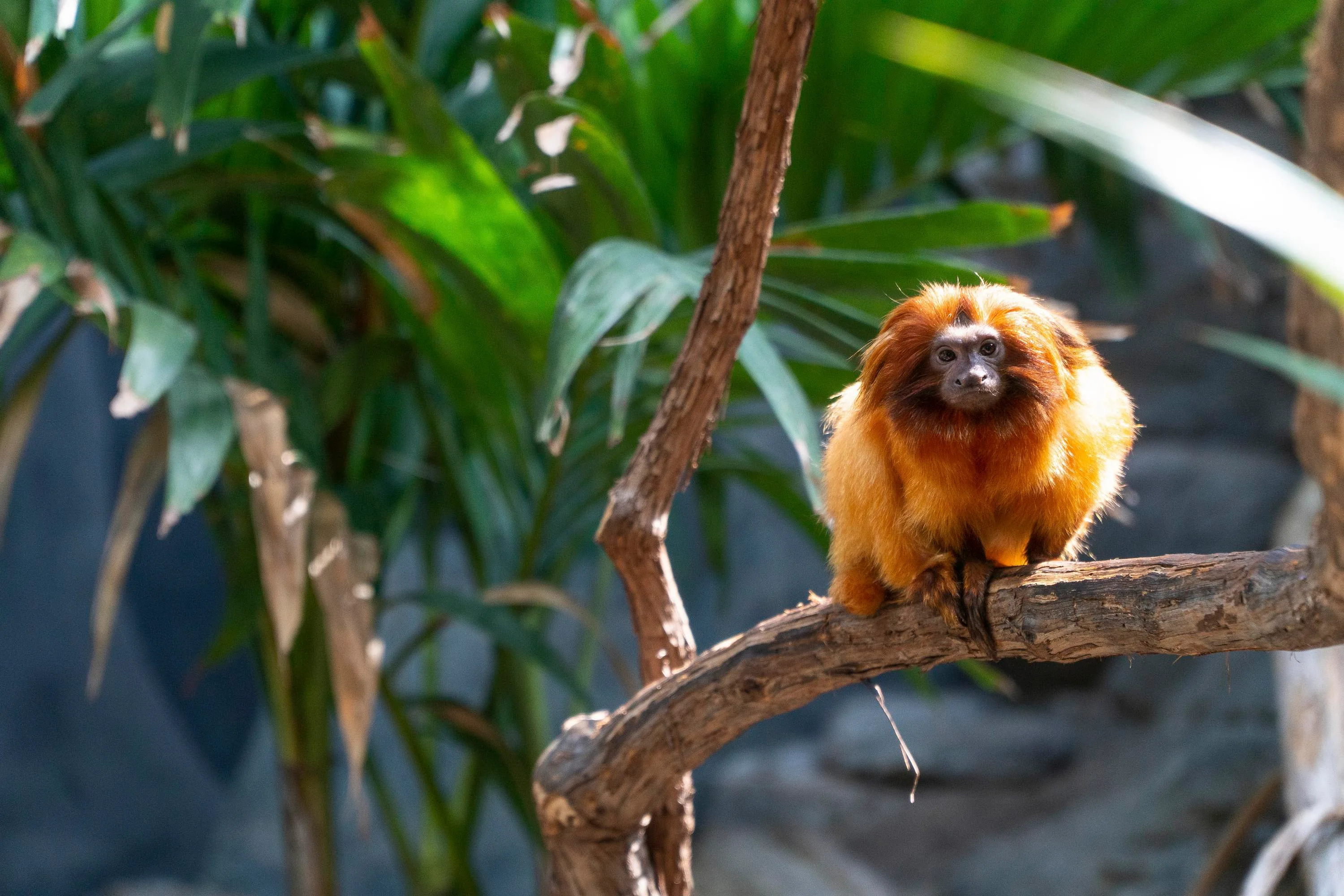
The golden lion tamarin appears in Planet Zoo 2's official Zoopedia with a Deluxe marker. Check your access to that content before planning it as part of your zoo. The species is a small forest primate with a distinctive reddish-gold coat and mane. Its exact simulated area, group limits, climbing requirement, feeding setup and compatibility are not verified in this guide.
This is a pre-release guide dated October 12, 2026. It explains identification, the content-pack boundary and a practical forest-display planning sequence. Real-world biology provides context for the exhibit's theme; it does not supply Planet Zoo 2's numerical care rules. Confirm the game's actual species values before choosing animals or finalizing the habitat.
Identify the animal before you build
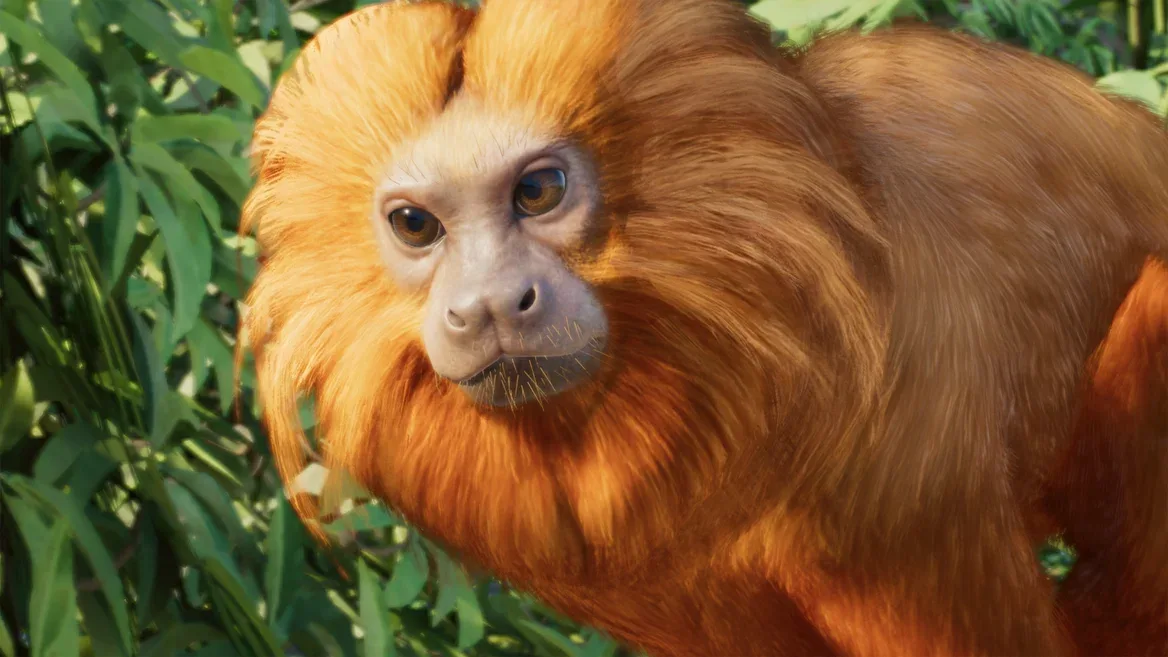
The scientific name is Leontopithecus rosalia. The golden lion tamarin is a monkey, and the 'lion' in its name refers to the mane-like hair framing its face. It is not a small member of the cat family. Look for the reddish-gold coat, a dark face and the long tail when identifying the animal in a picture.
The mane covers the ears and gives the face a distinctive outline. The hands and feet are narrow, and the fingers are suited to probing for food in small spaces. These real physical characteristics help make the species recognizable even when it appears among forest vegetation.
Do not assume that another lion tamarin has identical requirements because its name or appearance is similar. Confirm the exact Golden Lion Tamarin entry. That small identification step prevents a themed display from being planned around the wrong animal or a care sheet intended for a different species.
Check the Deluxe boundary before committing
The official index's Deluxe marker is the relevant access detail available for this species. It does not establish an adoption price, an unlock level or the availability of a particular individual in a particular mode. Keep those questions separate from the content pack listing.
Before creating a large themed area, confirm that your edition or installed content provides the species. If you cannot yet verify access, preserve the design as a concept rather than advertising it as a ready opening exhibit. A complete-looking forest building is of limited use if the intended animal is unavailable to your current setup.
Do not replace this check with an assumption that all animals in the public Zoopedia are included in every edition. The index covers animals with explicit content markers, and its pre-release material is identified as work in progress. Read the actual entry and your game context before making a final animal selection.
Base the visual theme on the Atlantic Forest
Real golden lion tamarins live in the Atlantic coastal forests of southeastern Brazil. They use humid forest environments with trees, vines and other vegetation. This makes an Atlantic Forest interpretation a more specific creative direction than a generic jungle enclosure.
As a design recommendation, choose a coherent forest backdrop and a few visible movement routes. Use the vegetation to frame the animal rather than covering every possible viewing angle. A small golden animal can disappear against a complicated scene even when the scenery is attractive from above.
This theme does not establish a simulated biome value or plant coverage percentage. Real rainforest descriptions cannot tell you which plants the game considers suitable or how much coverage it requires. Use the theme to shape the display's identity, then use the species information to make its functional choices.
Design for a small animal that visitors can recognize
The golden lion tamarin's small body and long tail make clear observation angles useful. Before placing a large facade, imagine where the animal might appear within the exhibit and whether its silhouette would be readable from the guest side.
A focused side view can be more helpful than a broad panorama filled with foliage. As a creative exercise, choose a visible branch or route as part of the composition, then keep the surrounding foreground relatively simple. This is an arrangement suggestion, not a verified guarantee that the animal will use that location.
Avoid making the entire viewing experience depend on a single pose. Planet Zoo 2 supports varied behavior, so your design should remain coherent when the animal moves elsewhere or rests. Give yourself more than one inspection angle so you can evaluate the functional arrangement without relying only on the main guest window.
Plan climbing without guessing measurements
Real golden lion tamarins move through trees and can leap between branches and vines. That explains why a connected forest structure is an appropriate concept. It does not reveal a Planet Zoo 2 climbing quantity, maximum gap or minimum support height.
Keep the first structure simple enough to inspect. Think about connections between its main parts and leave room to adjust them after the game's actual information is available. An elaborate network built entirely for appearance may be difficult to understand if the animal cannot reach one of its intended areas.
The sequel's interaction system supports accessible objects in varied positions and scales, but accessibility remains essential. Do not claim that shrinking or rotating a decoration makes it automatically usable by this species. Use the game to verify the arrangement, then preserve the functional route while adding the final forest scenery around it.
Distinguish feeding behavior from food settings
Real golden lion tamarins eat fruit, insects and other small prey. Their long fingers allow them to search crevices and vegetation for food. Family members can share food, which is an interesting part of the animal's biology and educational story.
These details do not establish the game's food item, keeper routine, food quality setting or recurring expense. Choose functional feeding objects using the actual Golden Lion Tamarin entry and supported options. A decorative log with crevices or an attractive fruit arrangement is not a substitute for a verified feeding facility.
As a planning sequence, establish the functional feeding setup before hiding it inside detailed scenery. Leave enough access for you to inspect the arrangement and compare it with the animal's needs. Once the basic setup is understood, you can give it a more natural appearance without confusing appearance with function.
Treat the family story as context
Real golden lion tamarins live in social family groups. They groom, play and share infant care, with relatives participating in raising young. This makes the species suitable for an educational story about cooperative family life.
It does not establish the game's permitted group size, breeding composition or number of offspring. Do not copy a wild family count into a Planet Zoo 2 care table. Read the simulated social requirements before selecting animals, and keep any breeding plan separate until the necessary values are known.
Likewise, a family-oriented species is not automatically compatible with every other small forest animal. Sharing a region or a diet cannot establish a safe mixed exhibit. If compatibility information is unavailable, keep your first plan focused on this species and leave possible additions as unconfirmed ideas rather than promising a tested combination.
Make a site plan that remains adjustable
No verified minimum habitat area is given here. A useful first step is to choose a site with a straightforward boundary, a service connection and a viewing edge. Keep at least part of the surrounding space available for adjustments instead of placing permanent buildings tightly around every side.
This is a construction recommendation, not a claim that unused space directly raises welfare. It allows you to respond to the actual care requirements without dismantling an entire themed district. For a small animal, the temptation to assume a tiny enclosure is especially strong; resist substituting body size for a simulated area value.
Separate the animal's home from visitor paths and decorative space outside it. A compact-looking display can still include a substantial surrounding building, and the total district footprint does not describe the animal's usable space. Keep those measurements distinct when you later evaluate or compare designs.
Use resting and shelter biology carefully
Real golden lion tamarins sleep in tree holes and are active during daylight. Those observations can inspire a forest theme with sheltered visual areas. They do not certify a specific shelter object, a day length or a simulated sleep schedule for Planet Zoo 2.
Avoid interpreting a single resting moment as a welfare failure. The sequel's animal decisions can respond to time, weather, season and internal state, but broad confirmation of that system is not a detailed behavior timetable for the tamarin. Check the animal's reported needs before attributing a pose to the enclosure.
If you include a decorative tree cavity, be clear about its role in your own design. It may support the educational story without being functional. Only describe it as satisfying a game requirement when the actual species information and the arrangement support that claim.
Give conservation a species-specific story
The real golden lion tamarin is endangered. Habitat loss and fragmentation have been major threats, and conservation work has included coordinated breeding, reintroduction, habitat restoration and the creation of forest connections. These ideas give the display a clear conservation purpose.
You can build the exhibit's interpretation around connected forests and the role of coordinated care. Avoid using an old population estimate as a current count; the useful point here is the relationship between habitat continuity and conservation effort. A dramatic number is unnecessary to explain why fragmented forests matter.
Planet Zoo 2 includes Wildlife Reserves, but this guide does not establish a tamarin-specific release requirement or conservation reward. Do not turn the real species' reintroduction history into an assumed game unlock. Read the relevant in-game conditions separately before planning to move animals into a reserve.
Introduce detail after the functional choices
A small primate display can benefit from careful scenery, but the functional arrangement should remain understandable. Start with the supported habitat, feeding and enrichment choices. Then use trunks, vines and vegetation to make those choices fit the visual theme.
As a planning recommendation, add decoration in stages and keep checking the view from the main observation points. Dense foreground planting can hide a small animal's coat and tail, while a cluttered structure can make access harder for you to evaluate. Removing one obstructing element may be more useful than adding several new objects.
An official image is a reference for appearance and a possible theme, not a complete husbandry blueprint. Do not assume every background object shown in it is required or that copying its scenery reproduces the species' needs. Preserve the difference between a recognizable scene and a verified functional home.
Complete a first tamarin display in order
Confirm content access and the exact entry first. Collect its actual space, environmental, social and feeding values. Reserve the enclosure, service route and a clear viewing edge. Build a simple connected climbing concept and the supported functional elements before finishing the forest scenery.
After adoption, compare the animal's needs with the setup and observe which parts are accessible. Revisit the foreground if the golden coat becomes hard to see. Keep possible tankmates or mixed-species additions out of the initial plan until compatibility is verified.